
Well Water Symptom Finder:Match what you’re seeing to a practical next step
Start with what you can check without taking anything apart. Did the change show up at one tap or throughout the house? Is it in hot water, cold water, or both? Did it begin after heavy rain, a power outage, nearby digging, a filter change, or well service? Choose the closest observation below. The Finder follows the same fixed path every time. It helps you plan questions and testing, but it does not diagnose the cause or determine that the water is safe.
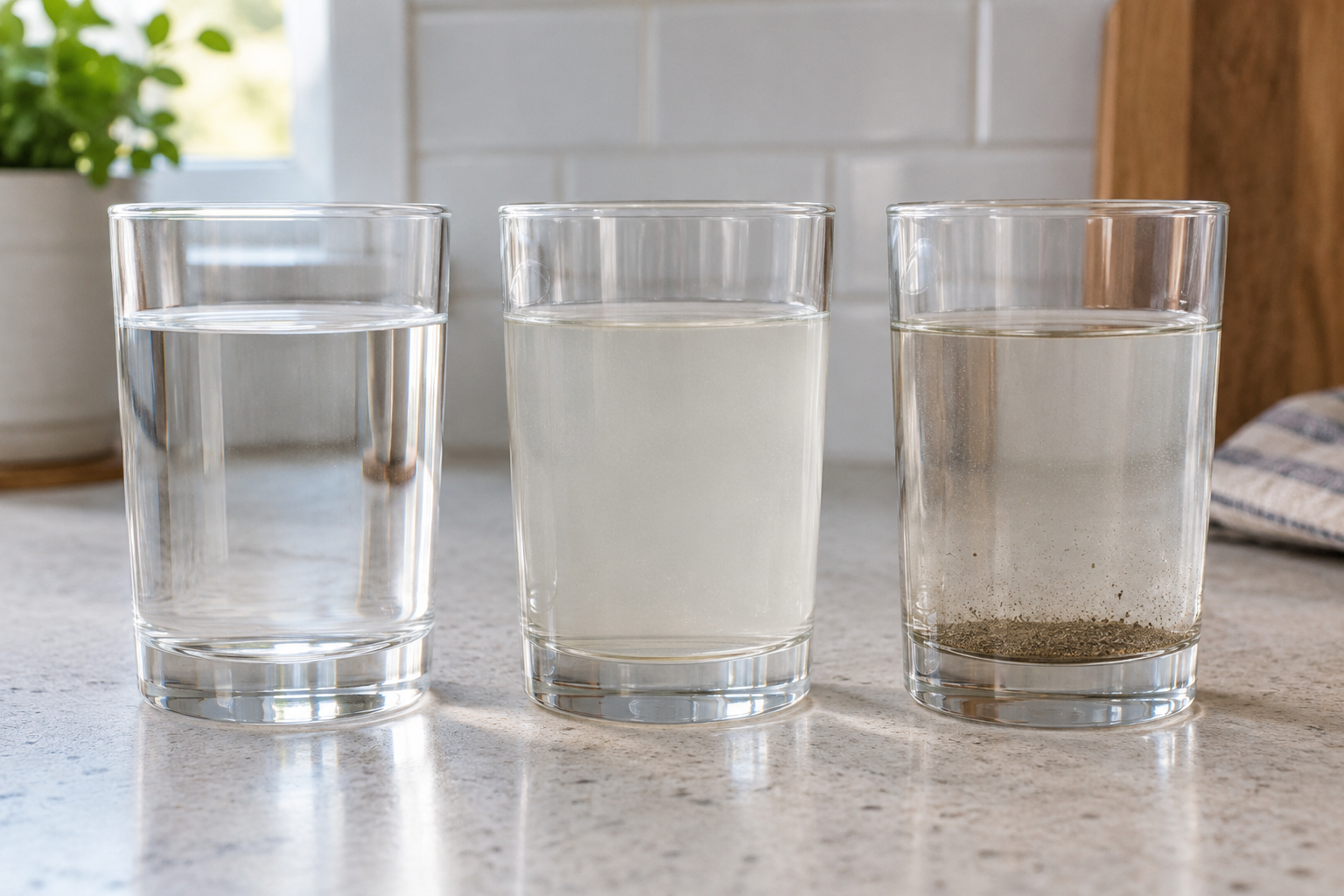
Your next steps based on what you noticed
Take your notes to the right local source
Call a state-certified drinking-water laboratory before collecting a sample so you use the right tap, bottle, preparation, and delivery timing. Depending on your location, your health department, extension office, or state private-well program can help with location-specific concerns and local contacts. Compare treatment only after the relevant contaminant, concentration, water chemistry, and household flow are known.