
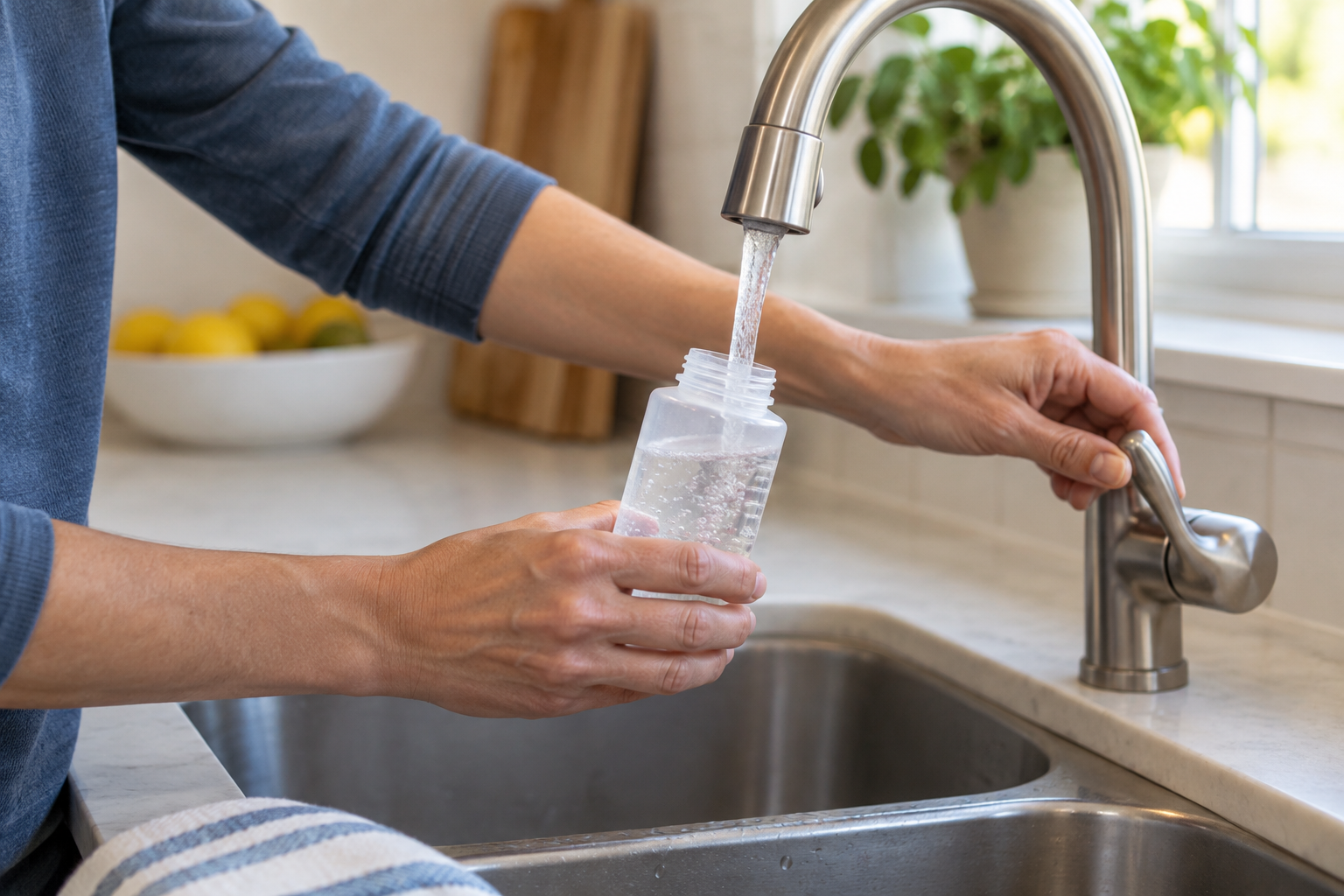
Private-well owners arrange their own testing. This page helps you decide when to test, where to collect the water, and what to confirm with the laboratory before you open a bottle.
- Observe. Note any change in color, odor, taste, clarity, pressure, nearby land use, or the well itself.
- Test. Ask a state-certified drinking-water laboratory which analyses, bottles, sample points, and delivery steps fit your reason for testing.
- Compare. Read the new report beside earlier results from the same well and sample point, then use current state or local guidance before considering treatment.
Step-by-step testing guides. The laboratory's directions come first. These walkthroughs help you sample cleanly, read the report, and plan around a softener.
- How to collect a well-water sample: the clean draw the laboratory needs.
- How to read a well-water lab report: structure, units, and what a non-detect means.
- Sample before or after a softener?: which tap to use and what to tell the laboratory.
Set a yearly baseline so changes stand out
The U.S. Centers for Disease Control and Prevention recommends testing at least annually for total coliform bacteria, nitrates, total dissolved solids and pH. Local geology and land use may make other tests important. Your state or local health department is the best starting point for location-specific advice.
Know when to test promptly instead of waiting for the yearly check
- After flooding or suspected surface-water entry
- After repairing or replacing part of the well system
- When taste, odor, color or clarity changes
- When nearby spills, construction or land use create a new concern
- When someone in the household is pregnant or an infant begins using the water
- When neighbors identify a groundwater problem
Compare a certified laboratory with home screening kits
Home kits may help with preliminary screening or routine operational checks, but results used to make health and treatment decisions should come from a state-certified drinking-water laboratory. Sampling instructions matter: the container, faucet location, flushing time, preservation and delivery schedule can all affect a result.
Ask the laboratory the questions that make results usable
- Are you certified by my state for the analytes I need?
- Which contaminants are locally relevant?
- Do you supply sterile or preserved containers?
- Where should each sample be collected?
- How quickly must the sample reach the laboratory?
- Will the report compare results with applicable standards or guidance?
Keep your water well records together for easier comparisons
Save laboratory reports, inspection notes, treatment settings, maintenance dates and changes in water quality. Trends across several years are often more informative than a single isolated result.
When your results arrive, use the test results checker to compare them with EPA reference levels. After shock chlorination, wait until all chlorine is gone (usually 7 to 10 days) before retesting for bacteria; the shock chlorination calculator gives you the dates.