
Buying a Home With a Water Well:
Know What to Test, Request, and Ask
Before you buy a home with a private well, collect the well log, complete lab reports, repair history, and equipment details. Then confirm the testing and sale requirements with the state well program and the county, township, health, or environmental office that handles private wells where the property is located.
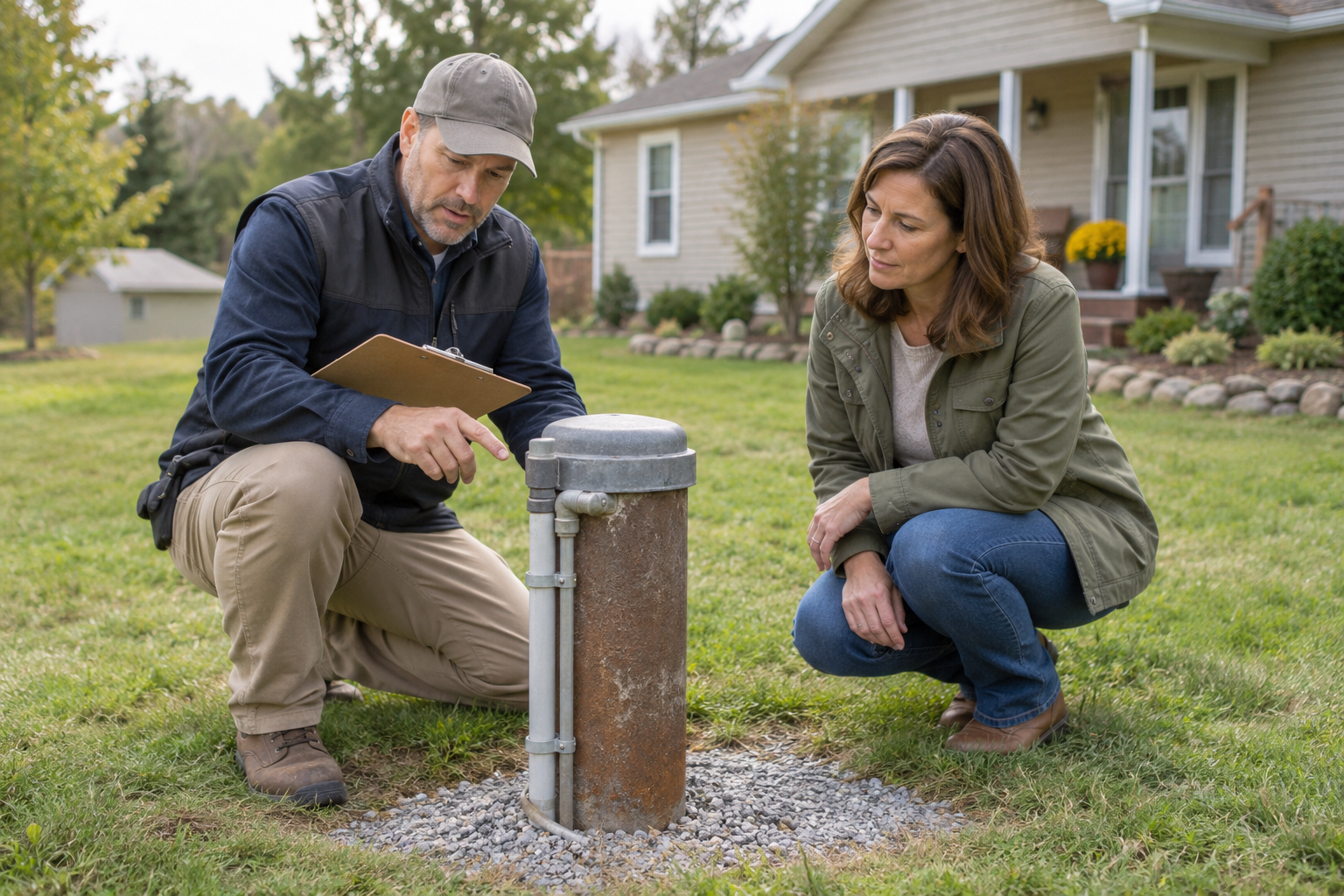
Treat the well as part of the property inspection, not as a kitchen-faucet detail. Its location, visible condition, records, water results, and service history can change the questions you ask before closing.
- Observe. Locate the well and treatment equipment, note drainage and visible condition, and ask what has changed on or near the property.
- Test. Use a state-certified drinking-water laboratory and follow the sample and timing requirements that apply to the sale or loan.
- Compare. Read current results beside prior reports, the well log, repair records, and local rules. Verify contractor licenses and laboratory certification with the issuing agency.
Buying or selling a home with a private water well
With a private well, the homeowner is responsible for testing, records, maintenance, and repairs. When you are buying, ask for the well records, any past test results, the well log if one exists, and the age and condition of the pump and pressure system. When you are selling, gather the same paperwork and be ready to share it. A pre-sale water test, or a contract condition tied to one, can prevent surprises on both sides. Work with your real estate professional, lender and local authority on what is expected in your market.
Find and read the water well records
The well log is the contractor's record of drilling, including depth, casing, installation and construction details. Well construction and pump installation records are often filed with a state agency and may be available by address or parcel. Test results, repair records and equipment receipts complete the picture. If the records are missing, your state well program can often point you to what exists.
Check state and local requirements before you commit
Private-well rules are set at the state and local level. They cover well construction, abandonment, testing at sale and sometimes routine testing. Requirements genuinely vary from one place to another, so check your state drinking-water well program and your county or township office for what applies to you. Do not assume that a practice from one region carries over to another.
Choose a contractor or certified laboratory with confidence
Well drilling, service and water testing call for specific qualifications issued or recognized by regulators. For a contractor, look for state licensing or registration where it exists, ask for references and verify the license number with the issuing agency. For testing, use a state-certified drinking-water laboratory and confirm it is certified for the specific analytes you need. You can verify certification through your state and through the EPA directory below.
Verify qualifications yourself
This site does not rank or vet providers. Confirm a contractor's license or registration with the issuing agency, request written estimates, and check references and available complaint records. For a laboratory, confirm that its certification covers the analyses you need and follow its sampling instructions.
Find the right local office for your questions
Your state drinking-water well program and local health or environmental office are the right first calls for property-specific questions. When you need a baseline, see the water testing guide. If a result leads to a treatment decision, compare treatment categories. Read about us to understand what we do and do not provide, and contact us if you have a question about the site.
Where this guidance comes from
Federal agencies provide directories and program maps you can use to locate the right state office and certified laboratories.
Guides for home buyers with a water well
- Touring a Home With a Well: What to Look At During a Showing
- Questions to Ask the Seller About the Well
- Well Yield and Flow Tests: Will the Well Keep Up With Your Household?
- Buying Land With No Well: How to Check for Water Before You Buy
- Moving From City Water to a Well: What Changes Day to Day
- Your First 30 Days in a Home With a Well