
Well Care · Owning a Well
Power Outages and Your Well: How to Plan for No Water
Why a power outage stops water on a private well, how to prepare with stored water and household plans, what to know about generators, and what to check when the power comes back.
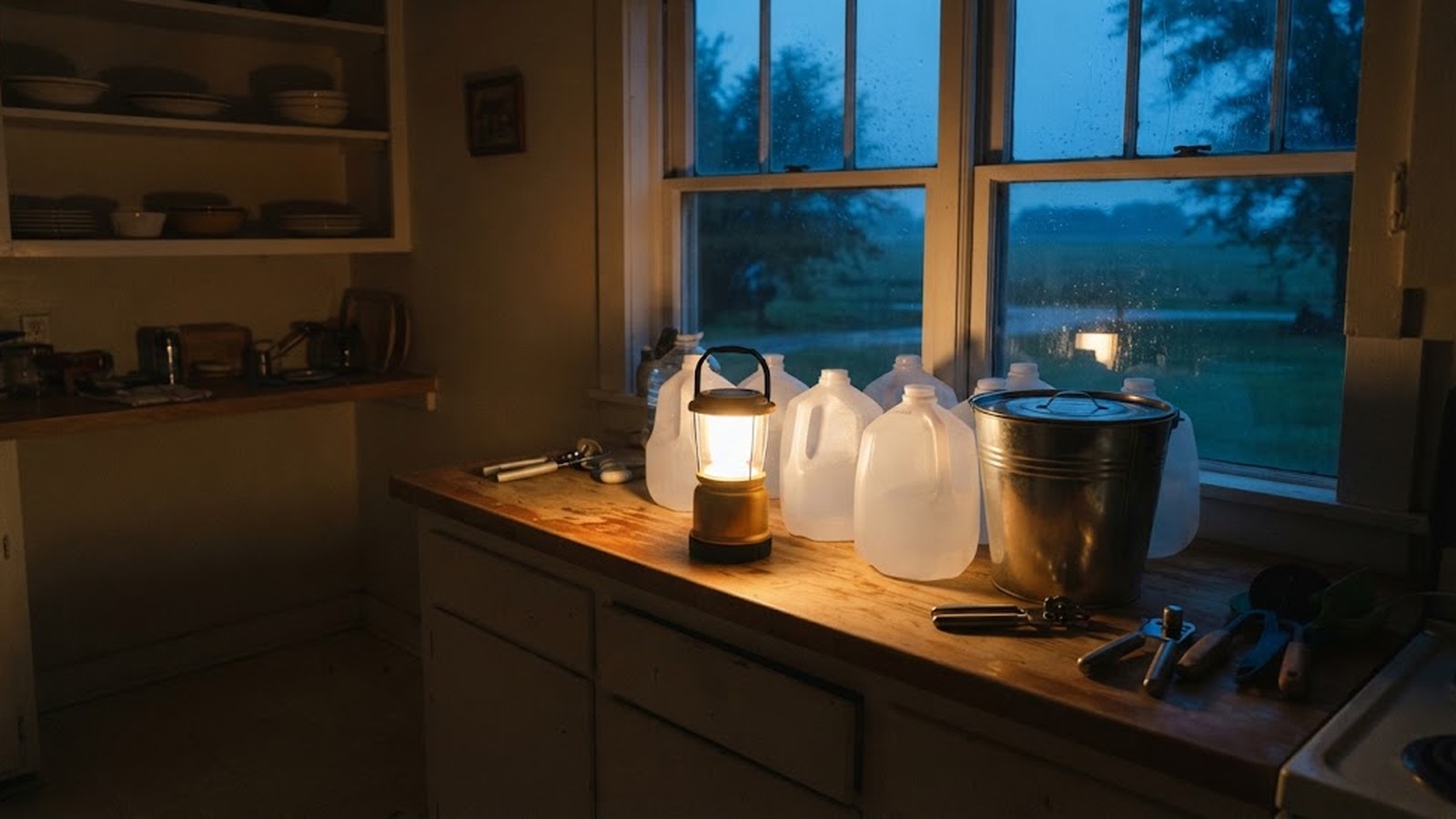
On city water, a power outage at your house is inconvenient, but the water usually keeps flowing. The utility's pumps and pressure are powered separately, often with backup systems. On a private well, it is different. Your pump runs on your home's electricity. When the power goes out, the pump stops, and within a short time, so does your water.
For people new to wells, this is often the biggest surprise. The first outage can mean no flushing toilets, no showers, no washing dishes, and no water for drinking unless you planned ahead. The good news is that planning is straightforward. This article explains what happens to your well system during an outage, how to prepare, what to know about generators, and what to check when power returns.
See what happens to your water, step by step, when the power goes out
Knowing the sequence in a typical system shows how little time you have:
- The pump stops. With no electricity, the pump cannot lift water from the well.
- The pressure tank keeps delivering for a little while. The water already stored in the tank, pushed by its air cushion, continues to flow when you open a faucet. But the usable amount is small. Our pressure tank article explains why.
- Pressure drops. As you use water, pressure falls until the tank has little left to give.
- Water stops. Faucets slow to a trickle and stop.
The same outage may affect other parts of your water system:
- Treatment equipment that uses power stops working. UV disinfection systems, softener controls, and some filter systems need electricity.
- Your water heater may stop heating, depending on whether it is electric or uses another fuel with electrical controls.
- Sump pumps stop, which can matter if your basement is prone to flooding, especially during storms.
- Some septic systems with pumps or alarms may be affected. If your septic system has a pump, ask your septic professional what an outage means for it.
Estimate how long your household can last without power
That depends on how much water you have stored, how many people are in the house, and how long the outage lasts. A pressure tank alone will not carry a household through more than a few flushes or a bit of drinking and cooking water. Beyond that, you rely on what you prepared ahead of time.
Many outages last only a few hours. Some last days, especially after major storms. It is worth planning for both.
Store water now so a power outage does not catch you without any
The simplest and most important preparation is keeping stored water on hand.
Store drinking and cooking water for every person and pet
Public emergency preparedness guidance, such as the resources at Ready.gov, generally recommends keeping at least a gallon of water per person per day for several days, with more for hot climates, pregnant or nursing people, and anyone who is ill. Pets need water too. Your local emergency management office may have specific recommendations for your area.
Options for drinking water storage include:
- Commercially bottled water, stored according to the label
- Clean food-grade water containers filled from your tap and stored properly
- A mix of both
If you fill containers from your own well, make sure your water is safe to drink based on recent laboratory testing. Stored water should be kept in a cool, dark place and rotated periodically according to public health guidance.
Set aside water for flushing toilets and washing
You need more water for non-drinking uses than most people expect. A toilet can be flushed during an outage by pouring a bucket of water into the bowl. That takes a fair amount of water per flush.
Common approaches for non-drinking water:
- Filling bathtubs before a predicted storm
- Keeping large containers or buckets of water in the garage or basement
- Using rain barrels, where legal and practical, for flushing
- Knowing where a nearby source of non-drinking water is, such as a pond or stream, for true emergencies, while keeping in mind that this water is not safe for drinking
Bathtub water is a classic storm-prep step. Fill tubs before a storm arrives, and use the water for flushing and washing, not drinking. Take care in homes with young children, since a full tub is a drowning hazard.
Set up a household plan so you know what stops and who to call
Beyond stored water, a little planning makes outages much easier.
Know which things stop. Make a short list: water, heat if your system depends on electricity, refrigerator and freezer, sump pump, lights, and devices.
Keep supplies together. Flashlights, batteries, a battery or hand-crank radio, a first-aid kit, hand sanitizer, paper plates and utensils, and wet wipes all reduce the need for water during an outage.
Plan for hygiene. Hand sanitizer and wipes are useful when you cannot wash with running water.
Protect pipes in winter. A long winter outage can mean freezing pipes if the house loses heat. Our winter article covers freeze protection. If you expect a long outage in freezing weather and the house will get cold, knowing how to drain your plumbing, or having a professional show you, can prevent damage.
Know how to turn off the pump. Find the breaker for your well pump. There are times, such as when power is unstable or flickering, when you may want to turn the pump off to protect it, and times when a professional will ask you to.
Keep phone numbers handy. Include your well service company, electrician, and utility company's outage line.
Decide whether a generator fits your well and your household
Many rural households use generators to keep the well running during outages. A generator can make an outage much more comfortable, but it needs to be chosen, installed, and used correctly.
Follow these generator safety rules before anything else
Never run a generator indoors or in a garage, basement, crawlspace, or near windows, doors, or vents. Generators produce carbon monoxide, which can be deadly. Follow the manufacturer's instructions for placement.
Use carbon monoxide alarms in your home.
Never plug a generator into a wall outlet to power your house. This is sometimes called backfeeding, and it can send electricity back into utility lines, endangering utility workers and neighbors, and it can damage your home's wiring and the generator.
Have a proper connection installed. Connecting a generator to your home's electrical system, including the well pump circuit, should be done with an approved transfer switch or similar device installed by a qualified, licensed electrician, in accordance with local codes.
Can a generator run my well pump?
Often yes, but it depends on the pump and the generator. Well pumps can draw a large surge of power when they start. A generator that is too small may not be able to start the pump, or it may struggle and damage equipment.
The right size depends on your pump's specifications, what else you want to run at the same time, and the type of generator. This is a question for a licensed electrician, and your well professional can tell you about your pump. Do not guess, and do not rely on a general rule of thumb for something that involves your home's electrical system.
Compare portable and standby generators
- Portable generators can be moved and connected through an installed transfer switch or inlet. They require refueling and setup during an outage.
- Standby generators are permanently installed and can start automatically when the power goes out. They cost more but require less effort during an outage.
Your choice depends on your budget, how often outages happen where you live, how long they last, and what you need to keep running.
Run a generator with your well without wasting fuel or power
Once a generator is properly installed and sized, follow the electrician's instructions for switching over, and avoid running large loads all at once so the pump is not competing with everything else for power. Remember that water use still runs the pump, which uses generator power and fuel. Keep fuel stored safely and legally, away from the well and the house, and have the generator maintained according to the manufacturer's instructions so it starts when you need it.
Weigh other ways to get water if you skip a generator
Not every household wants or needs a generator. Other options people consider include:
- More stored water, which may be enough if outages in your area are usually short
- Battery backup systems for some loads, which have their own limits and should be evaluated by a professional
- Manual hand pumps designed to be installed on some wells, which can provide water without electricity; a well professional can tell you whether your well is suitable
- Arrangements with neighbors who have generators, for filling containers during long outages
Make your water last while the power is out
Start with the water in your pressure tank and conserve it, using it for drinking and essential needs first. After that, use stored water for drinking and cooking, and bucket water for flushing. Avoid opening the water heater's hot water taps unnecessarily if it is not heating. If your treatment includes a UV system, remember that it is not working: water that passes through during the outage, if any, is not being treated by UV (more on this below). If you are running a generator, follow all safety rules and use water thoughtfully. In cold weather, keep an eye on pipes, well houses, and any exposed plumbing.
Check your system step by step when the power returns
Once power is restored, the pump will typically start as soon as it senses low pressure, refilling the tank and pressurizing the system. A few things to check:
Watch the pump and gauge in the first minutes
- Listen and look. Does the pump start and then stop normally once pressure is restored?
- Check the pressure gauge. Does it rise to the usual shutoff pressure?
- Watch for rapid cycling. If the pump turns on and off very quickly, mention it to a professional.
- Check for leaks around the pressure tank and plumbing.
Know when sputtering faucets are normal and when they are not
It is common for faucets to sputter with air after an outage, as the system repressurizes. Running a few faucets briefly usually clears it. If air continues well after the system should have recovered, or if the water looks different, it is worth investigating.
Decide whether cloudy or gritty water needs a closer look
Sometimes, when a pump starts after a period of rest, especially if it has been off a while, you may see a little cloudiness or sediment. If it clears quickly, it may be nothing. If it persists, or if the water looks, smells, or tastes different, see our sudden well water changes guide and our cloudy well water guide.
Handle a tripped pump breaker without making things worse
If the pump breaker tripped during the outage or when power returned, it may need to be reset. If it trips again, do not keep resetting it. Call a well professional or electrician. A breaker that trips repeatedly is a sign of a problem.
Spot surge damage after a storm
Storms that cause outages can also bring lightning and power surges. These can damage pumps, pressure switches, control boxes, and treatment equipment. If your system does not work normally after power returns, a surge could be the cause. Some homeowners ask an electrician about surge protection for the well circuit.
Treat water safely after a UV system loses power
If you have a UV disinfection system, an outage means it stopped treating water. When power returns, the lamp restarts, but water that sat in pipes downstream during the outage was not treated. Some UV systems also need time to warm up to full output.
Many UV manufacturers provide instructions for what to do after a power interruption, which may include flushing the system, and in some cases, disinfecting plumbing downstream of the UV unit. Follow your system's manual. If you are unsure, contact your water treatment professional.
Reset your softener and filter timers
Water softeners and some filters have control valves with clocks or schedules. After an outage, some reset automatically, and others lose their time setting and may regenerate at the wrong time. Check the display and reset the time if needed, according to the manual.
Restart your water heater correctly
If your water heater is electric, it will start heating again when power returns. If it uses gas or another fuel with electrical controls, follow the manufacturer's instructions for restarting it if needed.
After a storm, find out if flooding put your well water at risk
If the outage came with flooding, heavy rain, damage to the property, or anything that could have affected the well itself, it is more than a power problem. Floodwater can carry contamination into a well, especially if the wellhead was submerged or damaged.
In that case, see our Well Care page's guidance on what to do after flooding, and consult resources from the EPA and CDC on well safety after an emergency. It is common guidance to avoid drinking the water, to have the well inspected, disinfected, and tested by a certified laboratory before resuming normal use when flooding may have reached it.
Plan extra water for infants, older adults, and anyone with added needs
Some households need to plan a little more carefully, because running out of water affects them more.
Infants and young children. Formula preparation, bottle washing, and bathing all need water. Store more than the basic amount, and keep ready-to-feed formula on hand if your child uses formula, since it does not require mixing with water. Ask your pediatrician for guidance specific to your child.
Older adults and people with health conditions. Anyone who relies on medical equipment that needs power or water should plan with their health care provider and, where available, register with the local utility's medical priority program. Keep extra drinking water, and think about whether you would need to relocate during a long outage.
People with mobility limitations. Carrying buckets of water for flushing is hard work. Store non-drinking water close to where it will be used, in manageable container sizes, and arrange help from family or neighbors if needed.
Home businesses. If you run a business from home that uses water, such as a salon, a kitchen, or animal care, think through how an outage affects your work and your obligations to customers.
Pets. Pets need drinking water every day. Include them in your stored water calculations.
Keep livestock watered when the well pump is down
On farms and hobby properties, animals often depend on the well too. Horses, cattle, goats, and poultry can need a significant amount of water every day, and more in hot weather. An outage that lasts more than a short time can become an animal welfare concern.
A few planning ideas protect animals when the pump stops. Keep large stock tanks full, especially before predicted storms, and have extra tanks or containers that can be filled ahead of time. If you have a generator, find out whether it can run the well long enough to refill tanks. For extended outages, identify a backup water source and the means to haul water. Once power returns, check automatic waterers, since some use electric heaters or valves.
A veterinarian or agricultural extension office can offer guidance on how much water your specific animals need.
Line up neighbors and local help before the next outage
In rural areas, neighbors often help each other through outages. It is worth knowing:
- Which neighbors have generators, and whether they would be willing to let you fill containers during a long outage
- Whether any neighbors are elderly, living alone, or have medical needs, so you can check on them
- Whether the local fire department, town hall, or community center offers water distribution or warming centers during major outages
- Your local emergency management office's alert system, so you know when long outages are expected
A short conversation with neighbors before storm season can make a real difference during an emergency.
Pack an outage kit built around a well home
Keep these items together in one place so you are not hunting for them in the dark:
- Stored drinking water, based on your household and public preparedness guidance
- Containers or buckets for non-drinking water
- A bucket for flushing toilets
- Flashlights and extra batteries
- A battery or hand-crank radio
- Hand sanitizer and wet wipes
- Paper plates, cups, and utensils
- A first-aid kit
- A list of phone numbers, including your well service, electrician, and utility outage line
- A note showing the location of the pump breaker and main water shutoff
- Generator instructions and fuel stored safely, if you have one
Keep an outage log so your plan improves each time
After each significant outage, jot down a few notes in your well records: the date, how long the outage lasted, whether the system restarted normally, whether you noticed air, sediment, or changes in the water, and anything that went wrong or worked well in your plan. Over a few years, these notes show patterns. You may realize that outages in your area tend to last longer than you assumed, that your stored water always runs out on the second day, or that the pump sometimes needs a professional's attention after storms. That information helps you decide whether to add storage, invest in a generator, or ask about surge protection.
Rehearse your plan once on a calm day
It might sound silly, but practicing helps. Pick a calm day and walk through your outage plan. Find your stored water and check expiration or rotation dates. Flush a toilet with a bucket of water to see how much it takes. Find the pump breaker and confirm it is labeled. If you have a generator, go through the startup and switchover steps with the instructions in hand, following all safety rules. Then show everyone in the household where supplies are.
When the real outage comes, especially at night or during a storm, you will be glad you did.
Quick answers to common questions
How much water stays in the pressure tank when the power goes out?
Usually only a small amount, enough for a little drinking water or a few flushes. Plan on stored water rather than the tank.
Can I run my well pump from a portable generator on an extension cord?
Not safely without the right equipment. Well pumps are usually hard-wired, and connecting a generator to home circuits should be done through an approved transfer switch installed by a licensed electrician.
Is my water safe to drink right after the power comes back?
If nothing else happened, like flooding or damage, many systems simply restart. If you have UV treatment, follow the manufacturer's instructions for power interruptions. If anything seems different, test before drinking.
Store water, get a safe generator hookup, and check the system after each outage
On a private well, no power means no water, usually within a short time. Plan for that by storing drinking water based on public preparedness guidance, keeping non-drinking water for flushing and washing, and assembling a simple outage kit. If you want to keep the well running, have a properly sized generator connected by a licensed electrician through an approved transfer switch, and follow all generator safety rules.
When power returns, watch the pump restart, check the pressure gauge, look for leaks or rapid cycling, reset treatment equipment as needed, and follow your UV system's instructions if you have one. If the outage came with flooding or damage near the well, treat it as a possible water safety issue and follow guidance on inspection, disinfection, and testing. A little preparation turns an outage from a crisis into an inconvenience.