
Well Care · Owning a Well
Everyday Habits That Protect Your Water Well
Simple, practical habits for the yard, garden, garage, driveway, and household that help keep contamination away from a private well, from fertilizer and fuel to pets, projects, and parties.
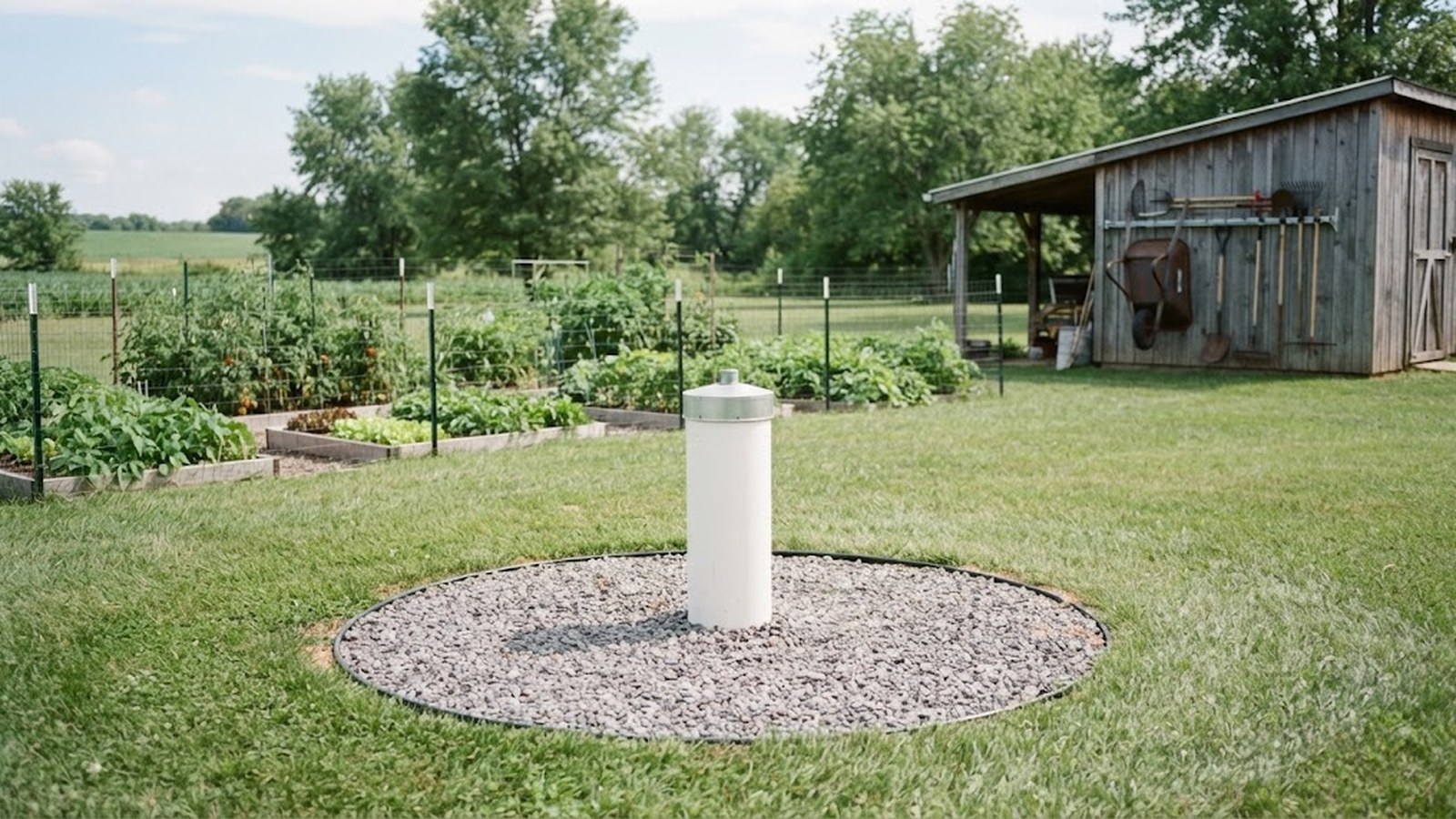
Most of what protects a private well happens at the surface. A properly built well with a good cap, casing, and seal is designed to keep contamination out, but it works best when the ground around it is treated with care. The groundwater your well draws from is connected, in one way or another, to the land above it. What you spread on the lawn, store in the shed, spill in the driveway, or pour down the drain can, under some conditions, find its way toward the water you drink.
Our Well Care page covers the annual inspection of your wellhead, cap, casing, and drainage. This article is about the rest of the year: the everyday habits in the yard, garden, garage, and home that reduce risk. None of them are complicated. Most are simply a matter of paying attention to where things go and how close they are to the well.
Grasp three principles: distance, containment, and care
Three simple principles run through almost every habit in this article.
Distance. The farther potential contaminants are from the well, the more opportunity soil has to filter them and the less likely they are to reach it. Local rules often set minimum distances for things like septic systems, fuel tanks, and livestock. For everyday items and activities, more distance is generally better.
Containment. Keeping products in sealed containers, on impervious surfaces, with secondary containment where appropriate, means that a spill stays where you can clean it up.
Care. Using products according to their labels, using no more than needed, and cleaning up promptly all reduce what can reach the ground in the first place.
Keep these in mind, and many decisions become obvious.
Treat the area around the wellhead as a protected zone
The area right around the well deserves the most protection. Think of it as a zone to keep clean, clear, and simple.
Keep the ground sloped away from the casing so water does not pool around it, and keep the soil and hardware themselves undisturbed. Do not plant gardens or flower beds right up against the well, since watering, fertilizing, and digging close to the casing is best avoided, and do not pile mulch, soil, firewood, leaves, snow, or debris against the casing either. Do not bury the wellhead or build over it; it needs to stay above ground and accessible for service. Do not use the well casing as a post for signs, fences, bird feeders, or anything else, keep pets and animals from using the area as a regular spot, and mark the well so mowers, vehicles, and visitors do not hit it.
A small ring of gravel or simple lawn around the wellhead, kept clear of clutter, is often all you need.
Protect your water with lawn care habits that limit chemicals
Lawns are one of the most common sources of chemicals near homes. You do not need to give up a nice lawn, but a few habits help.
Read and follow product labels. Fertilizers, herbicides, and insecticides come with application rates and instructions. Using more than directed does not make them work better and increases the chance of runoff and leaching.
Keep applications away from the well. Leave a buffer around the wellhead where you do not spread fertilizer or spray chemicals. Many product labels include guidance about wells and water; follow it.
Do not mix or load products near the well. Mixing concentrated products and filling spreaders or sprayers are the moments when spills are most likely. Do it well away from the wellhead, ideally on a surface where a spill can be cleaned up.
Avoid applying before heavy rain. Rain soon after application can wash products off the lawn and into the ground or toward low spots.
Consider whether you need it. Testing your soil, choosing grass types suited to your area, and mowing higher can reduce the need for fertilizer and chemicals. Your local extension office can offer region-specific lawn advice.
Clean spreaders and sprayers away from the well. Rinse water carries residue.
Garden habits that keep fertilizers and compost away from the well
Vegetable and flower gardens are wonderful additions to a rural property. A few considerations help keep them well-friendly.
- Locate gardens away from the wellhead. This keeps fertilizers, compost, manure, and watering away from the casing.
- Use manure and compost thoughtfully. Store piles away from the well, cover them if practical to reduce runoff, and apply at reasonable rates.
- Be careful with garden chemicals, following the same label-first approach as for the lawn.
- Watch irrigation. Heavy irrigation can move substances through soil, and it also draws on your well's capacity. Our article on drought and conservation has tips on efficient watering.
Keep pets' waste and care products away from the well
Pets are family, and they do not know anything about wells. Their waste, however, can carry bacteria and nutrients.
- Pick up after dogs, especially in the area near the well.
- Do not locate dog runs, kennels, or pet yards near the well.
- Dispose of pet waste in the trash or according to local guidance, not in a pile near the well.
- Store pet medications, flea treatments, and shampoos safely, and wash pets away from the wellhead.
Manage livestock and poultry waste and keep distance from the well
Larger animals bring larger amounts of waste. If you keep horses, goats, cattle, chickens, or other animals, start by keeping barns, pens, paddocks, and coops away from the well, and local rules or agricultural guidance may set specific distances to follow. Manage manure by storing it away from the well, on a surface or in a structure that limits runoff, and spreading it at appropriate times and rates. Manage runoff from animal areas so it does not flow toward the wellhead, and do not let animals congregate around the well or use it as a rubbing post. Protect water sources for animals too, including frost-free hydrants and stock tanks, from backflow into the well system. Ask a plumber or well professional about backflow prevention if you run hoses into troughs.
Your agricultural extension office can offer practical advice for your type and number of animals.
Store fuel and heating oil safely, away from the well
Petroleum products are among the most important things to keep away from a well.
Store gasoline, diesel, kerosene, and similar fuels in approved containers, away from the well, on a surface where spills can be contained and cleaned up. Refuel mowers, tractors, and equipment away from the wellhead, and do it carefully to avoid spills. Know about any fuel oil tanks on the property, above ground or buried; old buried tanks can leak over time. If you have one, or suspect one, talk to a qualified professional about inspection and your options. Watch for signs of leaks, such as stained soil, dead vegetation, or fuel odors, and clean up spills promptly using absorbent materials, disposing of them according to local rules. Report significant spills to the appropriate local or state agency, which can provide guidance.
Store garage and shed chemicals where a leak cannot reach the well
Garages and sheds tend to collect products over the years: paints, solvents, cleaners, antifreeze, motor oil, pesticides, pool chemicals, and more.
Store chemicals in their original, labeled containers, tightly closed, and keep them off the floor on shelves or in cabinets, using trays or bins that can catch leaks. Keep them away from the well, and never in a well house or pump house. Do not wash brushes, tools, or parts outside near the well, and dispose of leftovers properly. Many communities offer household hazardous waste collection days or drop-off sites, and you should never pour chemicals on the ground, into a ditch, or down the drain. Clean out old products periodically, since old, forgotten containers are more likely to leak.
Limit vehicle leaks and runoff near the driveway
Change oil and fluids away from the well, or have it done at a shop. Fix leaking vehicles promptly, and do not park leaking vehicles near the wellhead. Do not wash vehicles near the well with soaps or degreasers that run toward it. Be careful with deicers, using them sparingly near the well and following product directions. Do not store old vehicles, engines, or equipment near the wellhead, since they can leak fluids for years, and keep heavy vehicles off the water line and away from the wellhead to avoid physical damage.
Keep everyday house habits from sending chemicals down your drains
What goes down your drains matters too, especially if you have a septic system on the same property as your well. Our article on living with a well and septic system covers this in more detail.
Do not pour chemicals, solvents, paints, or medications down drains, use cleaning products in reasonable amounts, and fix leaking fixtures, which send extra water to the septic system. Dispose of medications through take-back programs or according to pharmacist or local guidance, rather than flushing, unless the label specifically says otherwise. Finally, think about water treatment discharge; softeners and some filters discharge backwash or brine, and where that water goes should follow the manufacturer's guidance and local rules.
Plan home projects so the well is not damaged or exposed
Home projects are exciting, but they are also moments when a well can be damaged or exposed.
Know where the well and water line are before digging, trenching, building, or bringing in heavy equipment, and call your local utility locate service before digging too, since buried electrical lines often run to the well. Protect the wellhead during construction with a visible barrier so equipment does not hit it. Do not let construction debris, fill, or soil pile up around the well, and do not let concrete washout, paint, or solvents go on the ground near it. Do not change grading in a way that directs runoff toward the well. Tell contractors where the well, water line, and septic system are, and put it in writing, and check with local officials about setback requirements before building additions, garages, pools, or outbuildings near the well.
After major projects, walk around the well and check that everything is intact. If there was any damage, have a professional check it, and consider testing. Our Well Care page covers what to do after damage.
Drain pools and place water features with your well in mind
- Store pool chemicals safely, away from the well and in a dry, well-ventilated place, according to label directions.
- Drain pools and hot tubs according to local rules and product guidance, away from the well.
- Think about well capacity before filling a pool. Filling a large pool all at once can strain some wells. Many people have pool water delivered, or they fill slowly over time. Our well yield article explains why.
- Protect against backflow when running hoses into pools or ponds. A well professional or plumber can advise.
Plant and build with your well's future in mind
Landscaping choices can affect a well for years.
- Plant trees and large shrubs away from the wellhead and water line. Roots can interfere with buried lines over time, and a tree growing next to the well makes service access difficult.
- Keep patios, walkways, and retaining walls from redirecting water toward the well. Hard surfaces shed water, and that water goes somewhere.
- Think before adding raised beds or berms near the well, since they can change drainage.
- Leave room for a service truck. Someday a well professional may need to pull the pump, which requires getting equipment close to the wellhead. Fences, gates, and plantings that block access can make that job harder and more expensive.
Handle burn barrels and waste away from the well
- Do not burn trash near the well, and check local rules on open burning.
- Do not bury trash, debris, or waste on the property.
- Keep old dumps or junk piles away from the well, and consider cleaning them up if they exist.
- Keep ashes and burn debris away from the wellhead.
Plan for extra guests, water use, and vehicles during events
A few seasonal reminders:
- Guests may not know about the well. Mark it and keep vehicles away during gatherings.
- Portable toilets for events should be placed away from the well.
- Temporary water use for events, like filling kiddie pools or washing lots of dishes, draws on your well; spread it out if your well is modest.
Know what to do after floods, spills, and water changes
Some events call for extra attention. After a flood, see our Well Care page and follow guidance on inspection, disinfection, and testing. For spills, clean up promptly and contact your local health department or environmental agency for guidance if a spill was significant or near the well. If the wellhead is damaged, have a professional inspect and repair it. Watch for nearby land use changes, such as new construction, farming practices, or businesses, which may be worth monitoring; if you are concerned, testing can provide information. And if your water looks, smells, or tastes different, see our sudden well water changes guide.
See the pathways that can carry pollution from the surface to your well
It helps to have a simple picture of how something on the surface could end up in well water. There are a few main pathways.
Down along the outside of the casing. If the seal around the casing is poor, or if water pools against the wellhead, surface water can run down the outside of the casing and reach the water below more quickly than it would through undisturbed soil. This is why grading, a good seal, and a casing that sticks up above ground matter so much.
Through the top of the well. A damaged, loose, or missing cap can let insects, small animals, debris, and surface water directly into the well.
Through the soil. Water that soaks into the ground carries dissolved substances with it. Soil can filter and break down many things, but how well it does that depends on soil type, depth to groundwater, and how much is applied. Sandy soils and shallow groundwater provide less protection than deep, fine-grained soils.
Through fractures. In areas where the ground is thin over bedrock, or where rock is fractured, water can move quickly with less natural filtering.
Through old wells. An unused well that was never properly closed can act as a direct pathway into groundwater. Our article on old or unused wells explains why they matter.
You do not need to know which pathway applies to your property. The point is that distance, containment, and a well-protected wellhead block or slow down all of them.
Follow a seasonal calendar and the habits become easy to remember
Tying habits to seasons makes them easier to remember.
Spring
- Walk around the wellhead after snowmelt and check for pooling, damage, or debris
- Plan lawn and garden applications with buffer zones in mind
- Check the shed and garage for containers that froze, cracked, or leaked over winter
- Consider spring testing, as discussed in our annual well testing guide
Summer
- Refuel equipment away from the well
- Watch irrigation and pool filling for well capacity
- Keep pets and gatherings away from the wellhead
- Check that the well marker is still visible above tall grass
Fall
- Store garden chemicals and fuel properly for winter
- Take leftover products to household hazardous waste collection
- Clear leaves from around the wellhead
- Mark the well for snow season and plan where snow piles will go
Winter
- Use deicers sparingly near the well
- Keep snow piles off the wellhead
- Check that plows and vehicles have not hit the well
Clear up misconceptions that put water at risk
"The well is deep, so nothing on the surface matters." Depth helps, but it is not a guarantee. A poorly sealed casing, a damaged cap, or fractured rock can create faster pathways.
"Organic products are always safe near the well." Manure, compost, and natural fertilizers still contain nutrients and, in some cases, bacteria. Distance and appropriate rates still matter.
"A little spill will not hurt." One small spill may not cause a problem, but repeated small spills in the same spot add up. Cleaning up promptly is a good habit.
"My neighbors' activities do not affect me." Groundwater does not stop at property lines. That is not a reason to worry about every neighbor, but it is a reason to test regularly and to be a good neighbor yourself.
"If the water looks fine, it is fine." Many contaminants have no color, odor, or taste. Testing is the only way to know.
Why you still need testing even with good habits
These habits reduce risk, but they do not replace testing. Some contaminants come from natural geology, not surface activities. Others may come from beyond your property line. And even with the best habits, things can change. Regular testing with a certified laboratory, as described in our annual well testing guide, is how you confirm that your water is what you expect.
The two go together: good habits reduce the chance of a problem, and testing tells you whether one has happened.
Use a quick checklist to keep each habit in mind
Around the wellhead
- Keep it clear, marked, and above ground
- Keep the ground sloped away
- Do not plant, pile, or build against it
Yard and garden
- Follow product labels
- Keep a buffer zone around the well
- Mix and load products away from the well
- Locate gardens, compost, and manure away from the well
Animals
- Pick up pet waste
- Keep animal areas and manure away from the well
Fuel and chemicals
- Store in approved, labeled containers away from the well
- Refuel and mix away from the well
- Dispose of leftovers properly
Vehicles and projects
- Service vehicles away from the well
- Know where the well and water line are before digging
- Protect the wellhead during construction
Household
- Keep chemicals and medications out of drains
- Maintain your septic system
Quick answers for common well-habit questions
How far from the well should I keep things?
Local rules set minimum distances for many features, such as septic systems and fuel tanks. For everyday items, more distance is better. Your local health department can tell you the required setbacks.
Is it okay to plant flowers around the well to hide it?
A few low plants a short distance away are usually fine, but avoid beds right against the casing that you water, fertilize, and dig in. Keep the cap accessible.
What if I already spilled something near the well?
Clean it up as soon as possible, contact your local health department or environmental agency for guidance if it was significant, and consider testing your water.
Does a well cap alone protect the water?
The cap is important, but it is one layer. The casing height, the seal around the casing, the grading, and what happens on the ground nearby all work together.
Protect the wellhead, keep distance, and test regularly
The land around your well is part of your water system. Keep the wellhead clear, marked, and protected. Keep lawn and garden products, fuel, chemicals, pets, livestock, and vehicles at a respectful distance, and handle products carefully with spills in mind. Be thoughtful about what goes down your drains, and protect the well during projects.
None of these habits take much effort once they become routine, and together they make a real difference. Combine them with regular laboratory testing, and you have the most practical, evidence-based approach to protecting the water you and your family rely on every day.