
New Wells · Installing Your First Well
Drilled, Bored, Driven, and Dug Wells: which type do you have?
A plain-language comparison of the main types of private wells, how each is built, where each tends to be used, and what each means for water supply, protection, and upkeep.
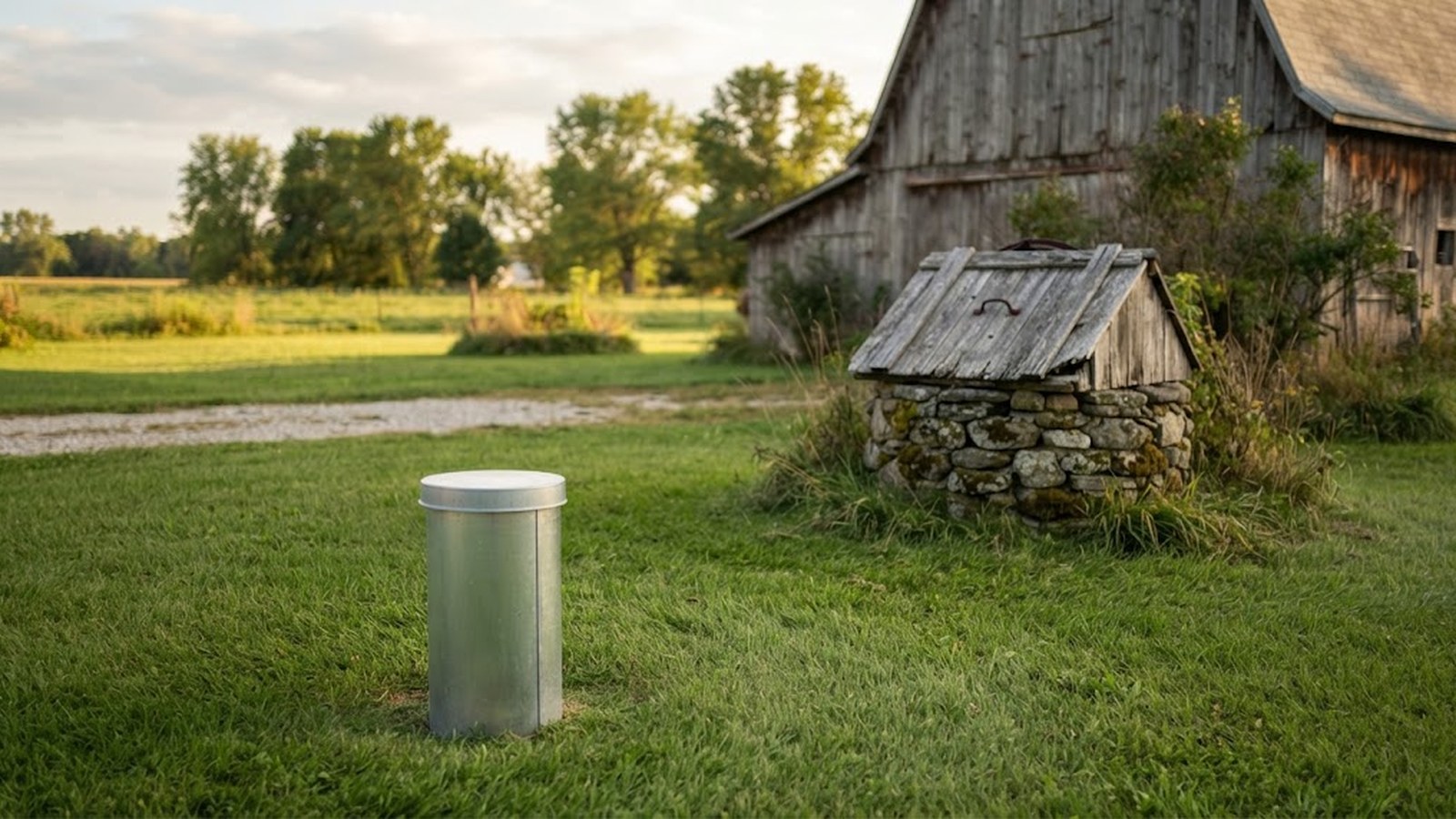
If you own, buy, or plan to build a home with a private well, one of the first useful things to know is what kind of well it is. Wells are not all built the same way. Some are wide and shallow, dug by hand generations ago. Some are narrow pipes driven into sandy ground. Most modern household wells are drilled deep into soil and rock by large machines. Each type has its own strengths, limitations, and needs.
Knowing the type of well helps you understand how well protected it is likely to be, how it might behave during dry spells, what kind of maintenance and testing it may need, and what questions to ask. This article explains the four main types of private wells in plain language: dug, bored, driven, and drilled. It is an overview for homeowners, not a construction guide. How wells are built, and which types are permitted, is governed by state and local rules and is the work of licensed professionals.
Know your well type to plan care, testing, and budget
The type of well influences several practical things. Depth determines how far the well reaches, which affects which water it draws from and how protected that water is. Diameter, how wide the well is, affects how much water it can store inside and how it is sealed and capped. Construction, meaning how the well is lined and sealed, affects how well it keeps out surface water and contamination. Water supply depends on depth and the aquifer tapped, which influences how the well behaves during droughts. Different types also need different levels of maintenance and testing, with some needing more vigilance than others. And rules vary: some types are no longer allowed for new construction in some areas, or come with special requirements.
Compare the four well types at a glance
| Type | Typical build | Typical depth | Typical diameter | Common setting |
|---|---|---|---|---|
| Dug | Excavated by hand or machine, often lined with stone, brick, or concrete | Shallow | Wide | Older homes and farms |
| Bored | Augered with a large boring tool, often lined with concrete tile or pipe | Shallow to moderate | Wide | Areas with soft soils |
| Driven | A pipe with a screened point driven into the ground | Shallow | Narrow | Sandy or gravelly areas with shallow water |
| Drilled | Drilled by a rig, lined with casing and sealed | Moderate to deep | Narrow | Most modern homes |
Depths and diameters here are general descriptions, not specifications. Actual dimensions vary widely by region, geology, and when the well was built.
Dug wells: how they work and what to watch
How dug wells are built
Dug wells are the oldest type. Historically, they were dug by hand with shovels, down to where water seeped in. Later, some were dug with machines like backhoes. The sides are usually lined with stone, brick, concrete rings, or other materials to keep them from collapsing. The top may be covered with a wooden or concrete lid, and some have a hand pump or a bucket and pulley.
Where you will find a dug well
Dug wells are common on older rural properties, farms, and historic homes. In some areas, they were the standard well type for generations. Many are still in use; many others sit unused.
Dug well strengths: water storage and simple construction
- Large storage. Because they are wide, dug wells can hold a meaningful volume of water inside them, which can help meet short periods of demand.
- Simple construction. They do not require specialized drilling equipment.
Dug well limits: shallow water, drought, covers, and safety
A dug well typically draws from shallow groundwater, which has had less opportunity to be filtered through soil and can be more vulnerable to surface contamination. Its wide openings and lined walls are harder to seal against surface water than a narrow casing with modern grout, and gaps in the lining can let shallow water in. Lids can crack, rot, or shift, letting in surface water, insects, and small animals. Shallow water levels can drop during dry periods, and dug wells may be among the first to struggle. And wide openings can be dangerous if covers fail.
What owning a dug well means for care and testing
If you have a dug well, regular testing is especially important. Public health agencies like the CDC recommend annual testing of private wells for bacteria and nitrate among other things, and shallow wells can be more susceptible to changes. Consider testing after heavy rain, flooding, or changes in the water too. Keep the cover secure and in good repair, and make sure surface water drains away from the well. Our annual well testing guide and Well Care page cover what to do.
Some owners of dug wells eventually drill a new well to get a deeper, better-protected supply. If you do, the old dug well usually needs to be properly closed. Our article on old or unused wells explains why.
Bored wells: how they work and what to watch
How bored wells are built
Bored wells are made with a large auger, a kind of giant drill bit that bores a wide hole into soft ground. They are usually lined with concrete tile, pipe, or similar materials. Bored wells are generally deeper than hand-dug wells but shallower than many drilled wells.
Where you will find a bored well
Bored wells tend to be used in areas with soft soils, like clay or loose sediments, where augers work well and rock is not close to the surface.
Bored well strengths: water storage in soft soils
- Moderate storage. Their width lets them store water inside, similar to dug wells, which helps in areas with slow-recovering groundwater.
- Useful in certain soils. In areas where drilling is difficult or unnecessary, bored wells can reach shallow aquifers efficiently.
Bored well limits: sealing, shallow water, and drought
- Relatively shallow water. Like dug wells, they may draw from groundwater that is more vulnerable to surface influences.
- Sealing challenges. Joints between lining sections and the annular space around the lining can let surface water in if not properly sealed.
- Drought sensitivity. Shallow water can drop during dry periods.
What owning a bored well means for care and testing
As with dug wells, regular testing, a secure cover, good drainage, and careful land use near the well are important. Ask a well professional about the condition of the lining and seal if you have concerns.
Driven wells: how they work and what to watch
How driven wells are built
A driven well is made by driving a narrow pipe with a pointed, screened tip, called a well point or sandpoint, into the ground. It may be pounded in by hand or with a machine. Additional sections of pipe are added as it goes deeper. Water enters through the screen at the bottom.
Where you will find a driven well
Driven wells work in areas with sandy or gravelly soils and shallow water tables. They are sometimes used for cottages, seasonal homes, irrigation, or in regions where shallow groundwater is plentiful and easy to reach.
Driven well strengths: simple, lower-cost installs in sandy ground
- Simple and relatively inexpensive to install in suitable conditions.
- Narrow diameter makes them easier to cap than a wide dug or bored well.
Driven well limits: low yield, shallow water, and little storage
Driven wells typically tap shallow groundwater, which can be more vulnerable to contamination. Their narrow diameter and shallow depth can limit how much water they supply, and their narrow diameter means little water is stored in the well itself. They only work in suitable soils and cannot be driven through rock or dense material. And because of their size and depth, they often use pumps located above ground.
What owning a driven well means for testing and rules
Regular testing and protecting the area around the well are especially important. If a driven well is used for drinking water, ask your local health department whether it meets current requirements. Some areas restrict their use for household drinking water.
Drilled wells: how they work and what to watch
How drilled wells are built
Drilled wells are made with a drilling rig, a truck-mounted machine that uses rotary drilling, percussion (cable tool) methods, or other techniques to bore a narrow hole deep into soil and rock. As the well is drilled, a casing, usually steel or plastic pipe, is installed in the upper part of the hole. The space between the casing and the surrounding ground is sealed with grout or another approved material. Below the casing, the well may be open rock or fitted with a screen, depending on the geology.
Where you will find a drilled well
Drilled wells are the most common type for modern homes in many parts of the country. They can reach much greater depths than other types and can be drilled through rock.
Drilled well strengths: depth, sealing, and a steadier supply
- Deeper water. Drilled wells can reach deeper aquifers, which are often better protected from surface contamination, though not always.
- Better sealing. A narrow casing with a grout seal is generally easier to protect against surface water than wide, lined wells.
- More consistent supply. Deeper water is often less affected by short-term dry spells, though drought can still affect some drilled wells.
- Standardized construction. Modern drilled wells are built according to state or local construction standards in many places.
Drilled well limits: cost, storage, and contamination risk
- Higher cost than simpler well types, especially when drilling deep or through hard rock.
- Less storage in the well itself than wide wells, though deep wells can still store a fair amount.
- Not immune to contamination. Poor construction, damaged casings, failing seals, or natural substances in the aquifer can still affect water quality. Some naturally occurring substances are more common in deep groundwater in some regions.
- Not immune to drought or declining yield. Some drilled wells, particularly in fractured rock, can have limited or variable yield.
What owning a drilled well means for care and testing
Drilled wells are generally well suited to household use, but they still need regular testing, a secure cap, a casing that extends above ground, good drainage, and care around the wellhead. Our Well Care page covers annual inspection of the wellhead, and our testing page covers routine testing.
Decode the drilling methods you will see in quotes and records
Even within the drilled category, wells can be made in different ways. You do not need to choose the method; your contractor will use what suits local geology and their equipment. But the names come up in quotes and records, so it helps to recognize them.
Rotary drilling. A rotating drill bit grinds through soil and rock. Air, water, or drilling fluid is used to carry cuttings up and out of the hole and to cool the bit. Rotary drilling is common and can be relatively fast.
Air rotary. A form of rotary drilling that uses compressed air to lift cuttings. It is often used in hard rock.
Mud rotary. A form of rotary drilling that uses a drilling fluid, sometimes called mud, to hold the hole open and carry cuttings. It is often used in loose or soft materials.
Cable tool, or percussion drilling. An older method in which a heavy bit is repeatedly raised and dropped to break up material, and the cuttings are periodically removed. It is slower but still used in some areas and situations.
Each method has advantages in different conditions. What matters most to you as an owner is the finished well: that it is properly cased, sealed, capped, developed, and documented according to local rules.
Recognize the other water sources you may find on a rural property
Wells are not the only private water sources on rural properties. You may also come across:
Springs. Some properties use a natural spring, where groundwater flows to the surface, collected in a spring box or similar structure. Springs can provide good water, but because they are fed by shallow groundwater and are open to the surface environment, they can be vulnerable to contamination and often need careful protection and regular testing.
Cisterns. A cistern is a tank that stores water, often collected from rain or delivered by a water hauler. Cisterns are common in areas where groundwater is scarce or poor. They need periodic cleaning and attention to keep stored water in good condition.
Surface water. Some properties draw from lakes, ponds, or streams. Surface water is generally more vulnerable to contamination than groundwater and usually needs more extensive treatment to be used for drinking.
Shared or community wells. A single well may serve several homes, with shared ownership and responsibilities.
If your property uses one of these sources, many of the same principles apply: know how the system works, protect it, and test it with a certified laboratory. Your local health department can offer guidance specific to your source.
Consider upgrading an older well before replacing it
Owners of older dug, bored, or driven wells sometimes ask whether their well can be improved rather than replaced. In some cases, a well professional can make meaningful upgrades. These can include replacing a deteriorated cover with a sanitary, secure cap or cover, extending the top of the well above ground level, improving the seal around the top of the well, regrading the surrounding ground so water drains away, and adding or improving the connection that brings water out below ground.
Whether upgrades are possible and worthwhile depends on the well's condition, construction, and local rules. In other cases, drilling a new well and properly closing the old one may make more sense. A licensed well professional can evaluate your options.
Look up well terms in a quick glossary
A quick reference for the terms you will come across. An aquifer is a layer of soil or rock that holds and transmits enough water to supply a well. The casing is the pipe that lines the upper part of a drilled well. Grout or seal is the material that fills the space between the casing and the surrounding ground. A screen is a slotted pipe that lets water into a well while keeping out sand and gravel. The well point is the screened tip at the bottom of a driven well. Static water level is the water level in a well when it has not been pumped for a while. And a well construction record is the document, often filed with a state agency, describing how a well was built.
Find out what type of well is on your property
If you are not sure what type of well you have, start by looking at the wellhead. A narrow pipe, typically a few inches to several inches across, sticking out of the ground with a cap is often a drilled or driven well, while a wide concrete or stone structure with a large lid is often a dug or bored well. Check your records next: the well construction record, if one exists, usually lists the well type, depth, and construction details. Many states keep well records that can be searched by address or location. You can also ask a previous owner or neighbor, and a well professional can often tell quickly and may be able to measure depth.
Understand what well depth does and does not tell you
Depth is closely related to well type, but it is not the same thing. Two drilled wells can have very different depths depending on geology. Depth matters because:
- Deeper water has often traveled farther through soil and rock, which can provide more natural filtering
- Deeper wells may be less affected by short-term weather changes
- Depth affects the pump type and the cost of drilling
But deeper does not automatically mean better water. Some naturally occurring minerals and substances can be more common at certain depths or in certain rock types. The only way to know your water is to test it.
Match your water testing to your well type
No matter what type of well you have, testing with a certified laboratory is the only way to know your water quality. That said, well type can inform how you think about testing:
- Shallow wells like dug, bored, and driven wells may be more responsive to surface events, so testing after heavy rain, flooding, or nearby land use changes may be especially useful.
- Deep drilled wells may be more stable, but annual testing is still recommended, and local geology may call for specific tests.
Your local health department or a certified lab can suggest tests appropriate for your well type and area.
Know how your well type connects to local rules
Rules about well types vary. Some areas no longer allow new dug or driven wells for household drinking water, or allow them only under certain conditions. Many areas have construction standards for drilled wells, including casing depth, sealing, and wellhead height. When you plan a new well, your contractor and local health department will tell you what is allowed. Our article on planning your first well covers permits.
Choose a pump that fits your well type
The type of well also shapes what kind of pump it uses. Deep drilled wells commonly use submersible pumps that sit down inside the well. Shallow wells, including many dug, bored, and driven wells, may use pumps located above ground, such as jet pumps in a basement or pump house, because the water is close enough to the surface to be drawn up. Older wells may still have hand pumps, sometimes decorative and sometimes working. Our article on how your well system works explains the difference between submersible and jet pumps and what each means for noise, maintenance, and service.
Ask about well type when you buy a home
If you are buying a home, knowing the well type helps you ask better questions and plan better tests. A dug well on an old farmhouse may raise different questions than a modern drilled well. Our articles on touring a home with a well and questions to ask the seller include questions about well type and construction.
Quick answers about conversions, depth, well types, and rules
Can I convert my dug well into a drilled well?
Usually a new drilled well is drilled separately, and the old dug well is properly closed. A well professional can advise on your situation.
Is a deeper well always safer?
Deeper wells are often better protected from surface influences, but some natural substances can be present at depth. Testing is the only way to know.
How can I tell a driven well from a drilled well?
Both can look like a narrow pipe at the surface. Records are the best way to know. A well professional can often tell by measuring depth and looking at the pipe and fittings.
Are dug wells still allowed?
It depends on your state and county. Some areas restrict new dug wells for drinking water or add special requirements. Your local health department can tell you.
Know your well type, protect the wellhead, and test regularly
Private wells come in four main types. Dug wells are wide and shallow, often older, and can store water but are harder to protect. Bored wells are augered into soft soils and share some of the same strengths and concerns. Driven wells are narrow pipes pushed into sandy ground to reach shallow water. Drilled wells are narrow, often deep, cased and sealed, and are the most common type for modern homes.
Each type has strengths and limitations, and none is automatically safe or unsafe. Know what type you have, protect the wellhead, follow good practices around the well, and test your water regularly with a certified laboratory. Whether your well was dug by hand a century ago or drilled last year, those habits are what keep your water on track.