
Private Well Care:
Stay Ahead of Problems With a Simple Routine
A useful well check starts with what you can see and hear: the cap and casing, the ground after rain, pump behavior, and changes at the tap. Record what you find, keep testing on schedule, and leave structural, electrical, or pressurized work to a qualified well professional.
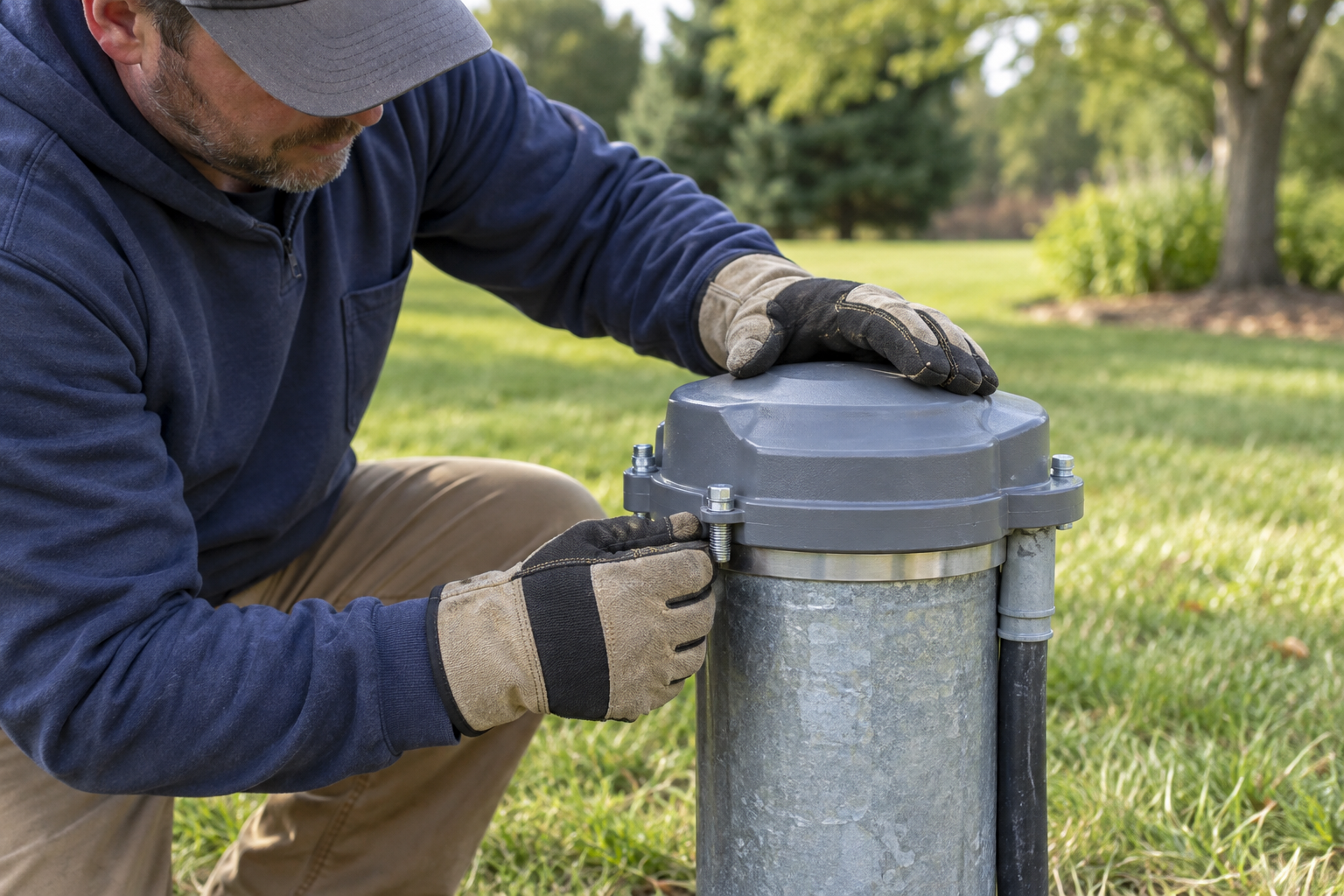
Walk the property with last year's notes or photos in hand. You are looking for changes, not trying to dismantle or diagnose the system yourself.
- Observe. Look for a loose or damaged cap, casing damage, pooled runoff, erosion, unusual noise, pressure changes, or new activity near the well.
- Test. Keep routine water testing current and ask a state-certified drinking-water laboratory or local health office what to test after flooding, repairs, or a sudden water change.
- Compare. Review photos, service records, and lab reports over time. Bring unexplained changes to your local well program or a qualified well professional.
Walk around your water well each year to spot changes
Set aside time each year to walk the well. Look at the casing, cap and the ground around the wellhead. Common goals include a sanitary cap, casing that extends above grade, no pooled water or erosion near the well, and no nearby storage of fuels, chemicals or waste. Many state agencies, universities and well contractors publish checklists for a homeowner-level annual check.
Check the wellhead, casing, and cap for damage
The casing is the pipe that lines the well, and the cap seals the top. A properly fitted cap keeps insects, surface water and debris out of the opening. If the casing is cracked, corroded, or has settled so that water can enter at the top, that is a pathway for contamination. Wear or damage to the cap, casing or the grout seal around the well is a prompt to consult a qualified well contractor.
Check where rain and runoff go
Surface water should drain away from the wellhead. Grading that pitches water toward the well, low spots that pond after rain, and downspouts or runoff directed at the casing all increase the chance that surface contaminants find their way in. Keep the area clear and the wellhead elevated and dry.
What to do after flooding or damage
After a flood that reached your well, or any suspected contamination, assume the well may be compromised until you confirm otherwise. Do not assume the water is safe. Plan for testing and, where appropriate, disinfection according to current guidance. Where illness is involved or the situation is uncertain, take protective steps first and consult your local health authority.
If your health department recommends disinfecting the well, the well shock chlorination calculator works out how much bleach to use for your casing size and water depth, with a step checklist and retest dates.
Notice pump and pressure changes early
Pumps and pressure systems deliver the water, and their condition affects supply and can signal problems. Falling pressure, sputtering flow, short cycling or unusual noise are worth investigating. Electrical, pressure-tank and submersible work is best left to a qualified well contractor rather than a general fix-it approach.
Keep water testing on schedule
Care of the structure does not replace testing of the water. Keep the two together: inspect the well and sample the water on a regular schedule. See the water testing guide for a baseline, and use the symptom finder if a change in your water gives you a specific clue. If you notice a physical problem with the well or its surroundings, review the water clues section for how a visible condition relates to what you might test for.
Where this guidance comes from
Government agencies publish reliable guidance for protecting private wells and responding after emergencies.
- EPA Protect Your Home's Water: everyday actions to protect your well.
- EPA: What to do with your private well after a flood
- CDC: How to disinfect wells after an emergency
Guides for owning a water well
- How Your Well System Works, From Aquifer to Faucet
- Your Pressure Tank Explained
- Power Outages and Your Well: How to Plan for No Water
- Winter, Freezing, and Vacant Homes: Protecting Your Well System
- Everyday Habits That Protect Your Well
- Living With a Well and a Septic System on the Same Lot
- Drought, Low Yield, and Conserving Water on a Well
- Old or Unused Wells on Your Property