
Well Care · Owning a Well
Winter, Freezing, and Vacant Homes: Protecting Your Well System
How cold weather affects private well systems, where freezing usually happens, how to prepare before winter, what to do if water stops in the cold, and how to care for a well at a seasonal or vacant home.
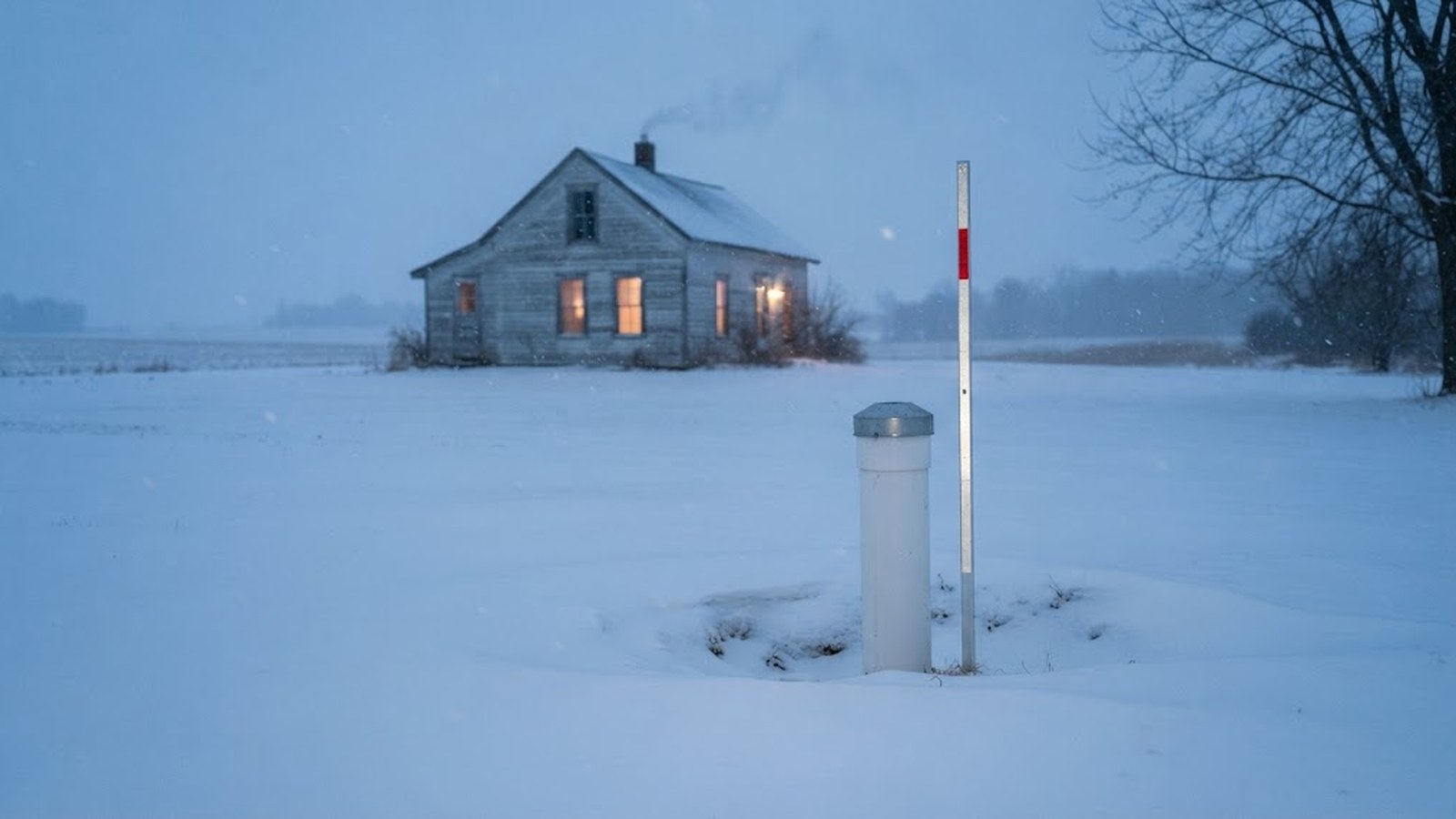
Winter asks more of a private well system than any other season. Cold weather can freeze pipes, crack equipment, and stop the flow of water just when you need it most. Snow and ice can bury the wellhead or hide it from plows. And for homes that sit empty for part of the year, like cabins, vacation homes, rentals, or houses between owners, winter brings a special set of risks because no one is there to notice a problem until it is a big one.
Before using a well again after a long vacancy, the shock chlorination calculator helps you disinfect it properly.
This article explains where freezing usually happens in a well system, how to prepare before cold weather, what to do if your water stops in winter, and how to care for a well at a seasonal or vacant home. Climates vary enormously, so some of this will matter more where you live than elsewhere. The principles are the same everywhere: keep water-filled parts warm or drained, keep the wellhead protected and accessible, and have a plan.
Find the weak spots where a well system can freeze
In a well-designed system in a cold climate, the parts that carry water are either buried deep enough to stay above freezing or located inside heated space. Freezing problems usually happen where one of those conditions breaks down.
The well itself. In most drilled wells, the water in the well is deep enough underground that it does not freeze. The casing near the surface can get cold, but the water level is usually well below the frost line. Problems at the well itself are less common than problems elsewhere in the system, though very old or shallow wells, well pits, and above-ground plumbing at the wellhead can be exceptions.
The buried water line. The line from the well to the house is normally buried below the local frost depth. If it is too shallow in places, if soil has eroded, or if the ground is unusually cold and bare (for example, under a plowed driveway where snow does not insulate it), it can freeze.
Where the line enters the house. The spot where the water line comes through a foundation wall or up through a slab can be a cold point, especially if the area is poorly insulated or near a vent.
Unheated spaces. Pressure tanks, switches, pipes, and treatment equipment in garages, crawlspaces, well houses, or unheated basements are at risk when temperatures drop.
Pressure switch and its tube. The small tube or fitting that connects the pressure switch to the water line holds a little water and can freeze, causing the switch to misread pressure.
Exterior walls and outdoor faucets. Pipes running along exterior walls and outdoor faucets are common trouble spots in any home, well or not.
Well pits. Older systems with equipment in a pit below ground level can be vulnerable to freezing, as well as to flooding and contamination. Pits can also be hazardous to enter.
Prepare your well in the fall to prevent most winter trouble
A little preparation in the fall prevents most winter trouble.
Protect the wellhead from plows, snow piles, and cold
Start by checking that the cap is secure and intact; our Well Care page explains what to look for. Then clear leaves, mulch, and debris from around the casing, and do not pile anything against it. Put a tall, visible marker near the well, like a reflective stake or flag, so plows, snowblowers, delivery trucks, and visitors do not hit it when it is covered in snow. Place the marker a short distance away so it does not interfere with the cap. Decide ahead of time where plowed or shoveled snow will go, and make sure it will not be piled on the well, because snowmelt around the wellhead in spring can bring surface water with it. Avoid wrapping the wellhead in materials that trap moisture or interfere with the cap's vent. If you have concerns about freezing at the wellhead, talk to a well professional about appropriate solutions.
Know where your water line runs and keep it covered
- Know where the line runs. If you do not know, a well professional may be able to help locate it. Knowing its route helps you avoid parking heavy vehicles over it, plowing snow off it in a way that exposes it to deep cold, or digging into it.
- Watch for shallow sections. Areas where soil has washed away or been graded down can leave the line less protected.
- Leave natural snow cover. Snow is an insulator. Where practical, avoid repeatedly clearing snow from the ground right above the water line.
Insulate and seal the cold spots inside your house
Insulate pipes in unheated or cold areas, like crawlspaces, garages, and along exterior walls, and seal drafts near where the water line enters, around foundation vents, and near the pressure tank. If the pressure tank and switch sit in a cold space, protect them. That might mean insulating the area, adding a safe heat source designed for the purpose, or relocating equipment with professional help. Check the manuals for your treatment equipment for freeze protection requirements, since many softeners, filters, and UV systems can be damaged by freezing. Disconnect garden hoses, and shut off and drain outdoor faucets if they are not frost-free types. Finally, learn where the main shutoff valve is so you can turn off water quickly if a pipe bursts, and where the pump breaker is.
Check the insulation and heat in well houses and pump houses
- Check insulation and heating. Many well houses rely on insulation and sometimes a small heater or heat lamp. Any heating device should be designed and installed safely, with attention to fire risk.
- Seal gaps where cold air or animals can get in.
- Clear out stored items, especially flammable materials and chemicals.
- Consider a low-temperature alarm or remote temperature sensor, especially if the well house is out of sight.
Use heat tape and heating cables safely to avoid a fire
Heat tape or heating cables are sometimes used to protect pipes in cold areas. They can be helpful, but they must be the right type for the job, installed according to the manufacturer's instructions, and inspected regularly. Improperly installed or damaged heat tape can be a fire hazard. If you use it, check it each fall, and consider having an electrician install or inspect it.
Recognize the early signs that your system is freezing
In cold weather, watch for reduced flow or no water at some or all faucets, and for frost on exposed pipes. A pump that runs continuously without building pressure can mean the line is blocked by ice, while a pump that does not turn on at all can mean the pressure switch tube is frozen. Unusual sounds in the plumbing are worth noticing, and so is water on the floor, which can mean a pipe has cracked.
Timing is a clue. If water stops on the coldest morning of the year, freezing is a likely suspect.
When your water stops in the cold, check these things in order
If you suspect freezing, a calm approach helps:
- Check the obvious first. Is the power on? Has the pump breaker tripped? Is the problem at every faucet or only some?
- Turn off the pump at the breaker if it appears to be running continuously without building pressure. Running a pump against a blockage or without water can damage it.
- Look for the likely cold spot. Is the pressure tank in a cold garage? Is there an exposed pipe near an exterior wall? Is the well house cold?
- Call a professional if you cannot identify and safely address the problem. A well service company or plumber can locate frozen sections and thaw them safely.
- Never use open flames to thaw pipes or equipment. Torches and similar tools can start fires and damage plumbing. Space heaters must be used with care, following their safety instructions, and never left unattended near flammable materials.
- Be ready for leaks. When a frozen pipe thaws, a crack that was plugged by ice can start leaking. Know where your shutoff valve is.
After the system is working again, check for leaks, watch the pump cycle normally, and note whether the water looks or smells different. If the plumbing was opened for repairs, ask the professional whether they recommend disinfection and testing.
See how winter can affect your water quality
Freezing is mostly a mechanical problem, but winter can affect water quality indirectly.
- Spring snowmelt can send a lot of water toward the wellhead if the ground slopes the wrong way or snow was piled near the well. This is one reason some owners like to test in spring. Our annual well testing guide discusses timing.
- Road salt from nearby roads or driveways can sometimes affect wells in some settings. Keep deicers used on your own property away from the wellhead, and use them sparingly near it.
- Repairs after freezing open the plumbing, which can introduce contamination.
- Stagnant water in vacant homes, discussed below, can develop quality changes.
If your water changes in winter, our sudden well water changes guide can help you think through next steps.
Protect a seasonal or vacant home where no one is watching the pipes
A home that sits empty for weeks or months faces all the same winter risks, plus one big one: no one is there to notice. A pipe that freezes and bursts in an occupied house is caught quickly. In an empty house, it may leak for days or weeks before anyone finds it.
Vacant homes also have water that sits still in the pipes, pressure tank, water heater, and treatment equipment. That stagnant water can develop tastes, odors, or other changes, and some treatment systems do not do well sitting idle.
Common situations include vacation cabins and seasonal homes, rental properties between tenants, and homes for sale, especially after the owners have moved out. They also include inherited homes waiting to be settled and homes whose owners travel for long periods.
There are two general approaches to protecting a well system in a vacant home in cold weather: keep it heated and monitored, or drain and winterize it.
Option one: keep it heated and monitored
Some owners keep the heat on at a safe minimum level and leave the water system operating. This keeps the house usable and avoids a full winterization. To reduce risk, keep the heat at a safe level, as recommended by your heating professional or insurer. Open cabinet doors under sinks on exterior walls so warm air reaches pipes, when that is safe for the home, and protect the pressure tank and any equipment in cold areas. Consider remote monitoring, such as low-temperature alerts, water leak sensors, and power outage alerts, which can warn you before a small problem becomes a flood. Arrange regular check-ins by a neighbor, property manager, or family member. You might also consider turning off the water at the main shutoff and turning off the pump breaker while the house is empty, so a leak cannot keep running. Be aware that some heating systems, like certain boilers, need water, so check with your heating professional before shutting off water to the whole house.
Check with your insurance company too. Some policies have specific requirements for vacant homes, including heat, monitoring, or regular inspections.
Option two: drain and winterize
For homes that will be empty through the coldest months, many owners choose to have the plumbing fully drained and winterized. This typically involves turning off the pump, draining the pressure tank, water heater, pipes, and fixtures, and sometimes adding a plumbing antifreeze designed for this purpose to traps and toilets.
Winterizing a home on a well has more steps than a home on city water, because the pressure tank, well system, and any treatment equipment all need attention. It is often best done by a plumber or well professional, at least the first time. Ask them to write down the steps so you can follow the same process for reopening.
Things to discuss with the professional include how to drain the pressure tank and whether its settings need attention, and how to drain or protect treatment equipment, following manufacturer instructions. Ask how to handle the water heater safely, whether any part of the system cannot be fully drained and needs another form of protection, what to do with the water line from the well, and how to safely shut off the pump.
Reopening a vacant home
When you return to a home that sat empty, whether it was winterized or kept heated, the water system deserves some attention before you settle in.
Follow the reopening steps from your winterization, if it was drained. Turn the pump back on and watch the system pressurize, checking the pressure gauge, then look for leaks everywhere, especially under sinks, around the tank, and near the water heater. Flush the plumbing by running faucets to bring fresh water through, and be mindful of the septic system by spreading out flushing if needed. Check treatment equipment and follow its startup instructions, since some systems need to be flushed, reset, or have filters replaced after sitting idle, and UV systems have specific instructions.
Consider testing the water with a certified laboratory, especially if the home was empty for a long time, if there were any repairs, if anything seems different, or if it has been more than a year since your last test. Many seasonal homeowners make a habit of testing at the start of each season. Our testing guide and our guide on how to collect a water sample can help.
Give the water heater attention. A water heater that was drained must be completely refilled before its heating elements or burner are turned back on, following the manufacturer's instructions. A heater that sat full but unused may produce hot water with an odor for a while; flushing it according to the manual often helps, and our sulfur odor guide explains why hot water sometimes smells when cold water does not. Check outdoor faucets and hoses once the weather warms, since freeze damage to an outdoor faucet may not show up until the first time it is used. Finally, observe the water: note color, clarity, odor, and taste. If something seems off, hold off on drinking until you know more.
Use remote monitoring wisely, and know where it falls short
Inexpensive smart devices have made it much easier to keep an eye on an empty house. For a well home, useful categories include:
- Temperature sensors that send an alert to your phone if the house, crawlspace, or well house gets too cold
- Water leak sensors placed near the pressure tank, water heater, washing machine, and under sinks
- Power outage alerts, which tell you when the pump, heat, and monitoring may all be down
- Smart shutoff valves, which can close the main water line automatically when a leak is detected
These tools are helpful, but they have limits. Most depend on power and an internet connection, which may fail during the same storm that causes the problem. Batteries need replacing. Alerts only help if someone can respond. Think of monitoring as an early warning system, not a replacement for good preparation and a local person who can check on the house.
Build a few winter habits that keep your well running all season
If you live in your home all winter, a few simple habits keep the system happy. Glance at the pressure gauge now and then, especially on very cold mornings, and listen for the pump running longer than usual or cycling rapidly. Check the well marker after storms to make sure it is still visible, and walk out to the wellhead after heavy snow or ice to make sure it has not been buried, bumped, or damaged. If you have a well house, keep a path to it clear so you can reach it in an emergency. Watch for drafts that develop as the season goes on, like a basement window left cracked. Keep stored water on hand too, since winter storms and power outages often go together; our power outage article explains why.
Landlords: tell tenants what to do so winter problems get caught early
If you own a rental property on a well, winter planning includes your tenants. Make sure they know where the main shutoff valve and the pump breaker are. They should also know not to turn the heat off or too low in cold weather, to report reduced flow, no water, or leaks right away, and who to call in an emergency.
Between tenants, the home may be vacant, so treat it as a vacant home. Local rules may also set responsibilities for landlords related to water supply, so it is worth checking with your local health department or housing authority.
Selling or buying in winter: plan for a winterized water system
If you are selling a home on a well during winter and have already moved out, the home is effectively vacant. Buyers and inspectors will want to test and evaluate the water system, which is difficult if the house is winterized. Talk with your agent about how to handle this: whether to keep the house heated and the system running, or to arrange for the system to be restored for inspections. Our Buying or Selling page discusses testing and records during a sale.
Run through this quick checklist to confirm your well is winter-ready
Outside
- Cap secure and wellhead clear
- Tall marker in place
- Snow removal plan keeps piles away from the well
- Water line route known
Inside
- Pipes in cold areas insulated
- Drafts sealed near water entry and equipment
- Pressure tank and switch protected
- Treatment equipment protected per manuals
- Outdoor faucets drained or frost-free
- Main shutoff and pump breaker labeled
Well house
- Insulated and sealed
- Safe heat source, if used, checked
- No stored flammables or chemicals
- Temperature alarm considered
Vacant homes
- Heat and monitoring plan, or winterization plan
- Insurance requirements checked
- Check-in person arranged
- Reopening steps written down
- Testing planned after reopening
Get quick answers to common winter well questions
Should I leave a faucet dripping in cold weather?
Some homeowners do this for pipes in cold spots, but on a well it runs the pump and sends water to the septic system. Insulating and protecting cold areas is usually a better long-term fix. Ask a plumber about your specific situation.
Can the water in my drilled well freeze?
In most drilled wells, the water is far enough underground that it does not freeze. Freezing problems usually happen in lines, fittings, and equipment near or above the surface.
Do I need to test my water after reopening a seasonal home?
It is a good habit, especially after long vacancies, repairs, or any change in the water. Many seasonal owners test at the start of each season.
Review the key points and choose your next winter step
Winter stresses private well systems at their weak points: shallow or exposed lines, unheated spaces, pressure switches, and treatment equipment. Before cold weather, protect and mark the wellhead, keep snow piles away from it, insulate and seal cold areas, and know where your shutoff and pump breaker are. If water stops in the cold, turn off a pump that is running without building pressure, look for the likely cold spot, and call a professional rather than using open flames.
For seasonal and vacant homes, choose between staying heated with monitoring or draining and winterizing, and plan the reopening as carefully as the closing. Flush, check equipment, and consider testing when you return. A little planning each fall means your water is ready when you are, no matter how cold it gets outside.