
Well Care · Owning a Well
Drought, Low Yield, and Conserving Water: keeping your water well going
How drought and low-yield wells affect homeowners, early signs your well is struggling, practical water-saving habits, and when to call a professional about storage, pumps, or other options.
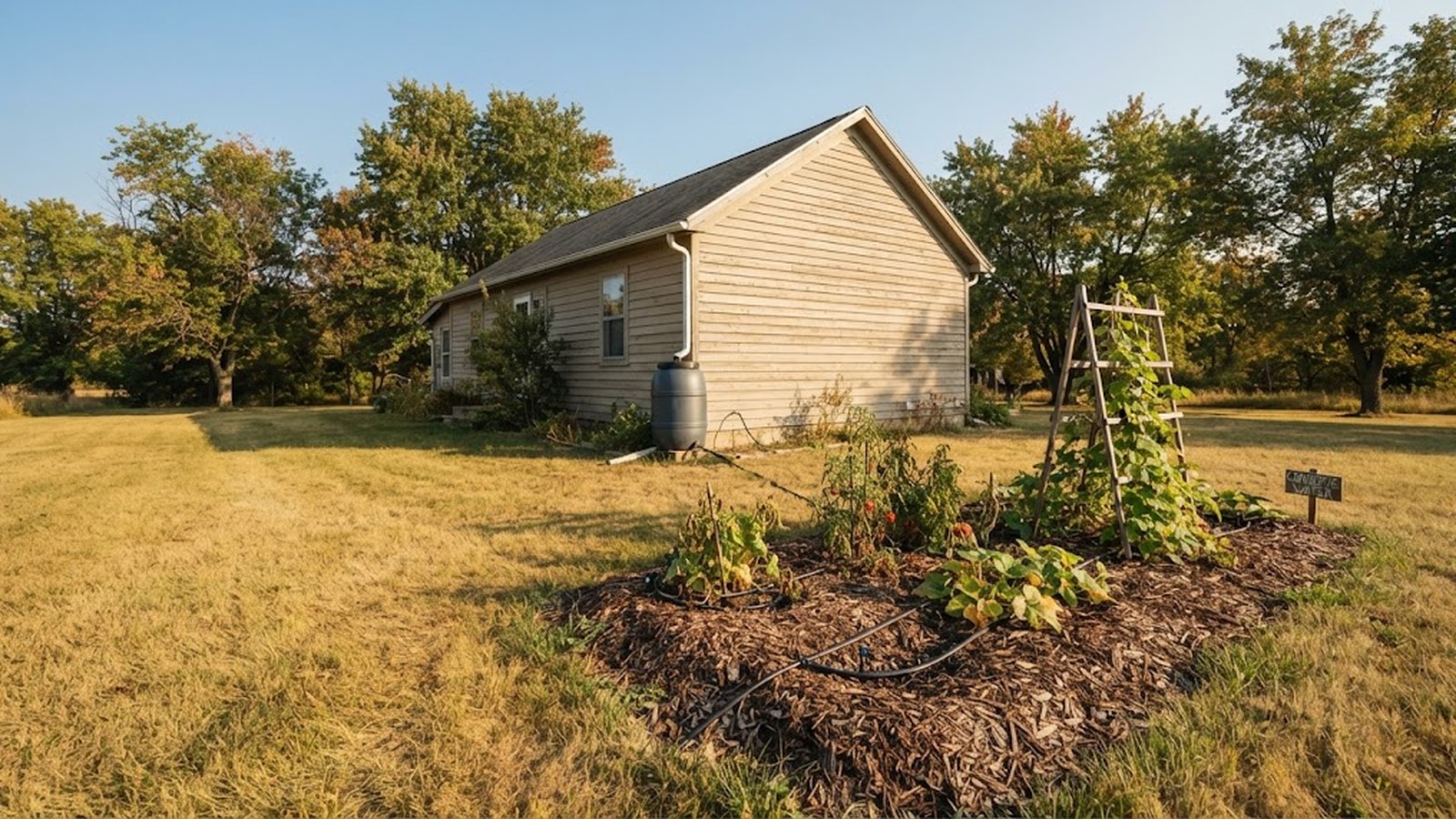
For most well owners, water is simply there. You turn on the tap, and it comes out. But during a drought, or on a property with a modest well, water can become something you think about every day. Pressure fades in the middle of a shower. The faucet sputters with air. The pump runs and runs. In the worst cases, the water stops altogether until the well recovers.
This can be stressful, especially the first time it happens. The good news is that most households can make a real difference with practical habits, and there are professional options when habits are not enough. This article explains how drought and low yield affect wells, the early signs that your well is struggling, water-saving strategies that actually help, and when to call a well professional.
Tell whether drought or a low-yield well is behind your shortage
It helps to separate two situations that often overlap, because the fix for one is not always the fix for the other.
Drought is a regional condition. Extended dry weather reduces the amount of water soaking into the ground, and groundwater levels in some areas can drop. Wells that work fine in normal years may struggle during a drought, particularly shallower wells or wells in aquifers that respond quickly to changes in rainfall.
Low yield is a characteristic of a particular well. Some wells simply produce water slowly, because of the geology they tap or how they were built. A low-yield well may be a challenge in any season, and a drought can make it worse. Our article on well yield and flow tests explains yield in more detail.
A well can also lose performance over time, even when the weather is normal, because of mineral buildup, sediment, or other changes in and around the well. In that case, the solution may be different from what helps during a drought.
Spot the early warning signs before your well runs short
Wells rarely go from perfect to empty overnight. There are usually warning signs, and catching them early gives you time to adjust before you lose water.
The most common sign is pressure that drops during heavy use and takes longer to recover. You may also hear air spurting or sputtering from faucets, especially after long periods of use, or see cloudy, muddy, or sandy water that appears when the well is pumped hard. Watch the pump too: it may run longer than usual to build pressure, or it may run without building pressure the way it used to. Some households notice water stopping briefly and then returning after a rest. Others hear from neighbors who are having problems during the same dry period, or see that the pressure gauge shows different on and off readings than their baseline.
Some of these signs can also point to problems with the pump, pressure tank, or plumbing, not just the water supply. That is why it helps to keep a baseline of how your system normally behaves, as described in our pressure tank article, and to involve a professional when things change.
Protect your pump and your supply the moment water runs short
If your water sputters, turns cloudy, or stops during heavy use, work through these steps in order:
- Stop using water. Give the well time to recover. Turn off irrigation, delay laundry and dishwashing, and avoid showers for a while.
- Protect the pump. Some pumps can be damaged if they run without enough water. If the pump seems to be running continuously without building pressure, turning it off at the breaker and calling a professional may be the safest choice. Some systems have protective devices that shut the pump off automatically; a professional can tell you whether yours does.
- Wait and observe. After a rest, see whether water returns with normal clarity and pressure. Note how long it took.
- Write it down. Record the date, what was happening in the house, the weather, and how long recovery took. This is valuable information for a professional.
- Call a professional if this happens more than once, if water does not return, or if you are unsure what is happening.
If the water looked cloudy or sandy, give it time to clear before drinking, and consider whether testing makes sense. Our cloudy well water guide and our sudden well water changes guide explain next steps.
Find out where your household water goes so you cut the right thing
Before you can save water effectively, it helps to know where it goes. Indoors, the big users are toilets (which can be one of the largest indoor uses, especially older, less efficient models), showers and baths, laundry, dishwashers, and faucets for cooking, drinking, cleaning, and handwashing. Leaks belong on the list too, because they can be surprisingly large and invisible. Outdoors, lawns, gardens, vehicle washing, pool filling, and livestock all draw from the same well. Even water treatment counts: some softeners and filters use water to regenerate or backwash.
On a well, outdoor use and leaks often matter most during a drought, because they can use large volumes quickly. Indoor use tends to come in peaks, like mornings and evenings, which is when a low-yield well may struggle.
Cut indoor water use and smooth out your busiest hours
These habits reduce total water use and help smooth out peaks.
Find and fix leaks before they drain your well
A leaking toilet can waste a lot of water quietly, running your pump and filling your septic system. A simple check: add a few drops of food coloring to the toilet tank, wait a while without flushing, and see whether color appears in the bowl. If it does, the flapper or another part may need replacing.
Also check faucets, showerheads, outdoor spigots, and any visible pipes. If your pump runs when no water is being used, you may have a hidden leak somewhere in the system. That is worth investigating promptly.
Spread out big water uses to ease the strain
On a low-yield well, the timing of water use can matter as much as the total. Instead of doing three loads of laundry, running the dishwasher, and having everyone shower in the same two hours:
- Spread laundry across the week, one load at a time
- Run the dishwasher at a different time of day than showers
- Stagger showers in the morning if possible
- Avoid starting big water uses back to back
Choose water-efficient fixtures when you replace them
When it is time to replace a toilet, showerhead, faucet, washing machine, or dishwasher, choosing a water-efficient model can reduce your use for years. Look for products with recognized efficiency labels, such as EPA WaterSense for fixtures.
Build small daily habits that add up
Small changes work because they repeat every day. Turn off the faucet while brushing teeth or scrubbing dishes, and keep a pitcher of drinking water in the refrigerator instead of running the tap until it is cold. Take shorter showers, and run only full loads in the dishwasher and washing machine. While you wait for the shower to warm up, you can collect that water and use it for plants.
Check how your water treatment system uses water
Some water softeners and backwashing filters use water on a timer, whether or not the household used much water. Others regenerate based on how much water has passed through. If your treatment system regenerates frequently, a water treatment professional may be able to adjust it to match your actual water use and quality. Do not change settings on your own unless you understand them; incorrect settings can make treatment ineffective.
Save water outdoors, where drought savings are often biggest
Outdoor water use is often where the biggest savings are found, particularly in summer.
Water your lawn deeply and less often
Follow local extension guidance and water deeply but less often, rather than a little every day. Early morning is the best time, since less water evaporates. Mowing higher can help grass tolerate dry conditions. In a drought you can also let the lawn go dormant if you are comfortable with that, since many grasses recover when rain returns. Over the longer term, consider replacing some lawn with plants suited to your climate that need less water.
Get garden water to the roots with less waste
- Use drip irrigation or soaker hoses, which deliver water to plant roots with less waste
- Mulch beds to hold moisture in the soil
- Group plants by water needs
- Water based on need, not a fixed schedule
Collect rainwater after checking local rules
Collecting rainwater from roofs for garden use can reduce demand on your well. Check local rules, since some areas regulate rainwater collection. Rain barrel water is generally not for drinking.
Fill pools and hot tubs without draining your well
Filling a pool or large hot tub can draw a huge amount of water from a well in a short time. On a low-yield well or during a drought, consider having water delivered by a water hauling service, or fill very slowly over days with rest periods. Use a cover to reduce evaporation.
Wash vehicles and clean outdoors with less water
- Use a bucket and a hose with a shutoff nozzle instead of an open hose
- Sweep driveways and walkways instead of hosing them off
- Consider a commercial car wash during droughts
Stop animal water systems from wasting water
Animals need water, and their needs come first. But you can reduce waste by checking stock tanks and automatic waterers for leaks and overflows, shading tanks to reduce evaporation, and fixing dripping hydrants.
Know what a well professional can do when habits are not enough
Sometimes, even with careful habits, a well cannot keep up. A qualified well professional can evaluate your system and discuss options. Which ones make sense depends on your well, your property, your household, and your local conditions.
Start with a system check to rule out mechanical problems
A professional may check the pump, pressure tank, controls, and plumbing to rule out mechanical problems. Sometimes what looks like a water supply issue is actually a failing pump, a tank problem, a clogged filter, or a leak. They may also measure water levels or perform a flow test to understand the well's current performance.
Add storage so a modest well can meet peak demand
For low-yield wells, a common solution is adding a storage tank and a booster pump. The well pump fills the storage tank slowly over time, and the booster pump supplies water to the house from the tank. This lets a well with modest yield meet peak demands, because the storage tank acts as a buffer. Storage systems need proper design, installation, and maintenance, including attention to water quality in the tank.
Match the pump to your well, or replace it
The pump may not be well matched to the well. A professional may recommend adjusting how the pump operates, moving it to a different depth, or replacing it with a model better suited to the well. Some systems use controls that protect the pump from running dry.
Restore lost performance through well rehabilitation
If the well has lost performance because of mineral buildup, sediment, or biological growth, a professional may recommend cleaning or rehabilitation methods. Results vary, and not every well is a good candidate.
Weigh deepening the well or drilling a new one
In some situations, deepening an existing well or drilling a new one may be the best long-term option. These are significant projects with real costs and no guarantees of finding more water. Our articles on planning your first well, comparing drilling quotes, and what to expect on drilling day explain what these projects involve.
Cover a severe drought with temporary water supplies
During severe droughts, some households have water delivered to a storage tank or cistern, or use water from other sources for non-drinking uses. Local emergency management or health departments may have resources or guidance during declared droughts.
If you use a water hauling service, ask whether they carry water intended for drinking and how their tanks are cleaned and maintained. Ask your well or plumbing professional how delivered water should be connected to your system, if at all, so that it does not flow back into the well or bypass your treatment in an unsafe way. Any storage tank or cistern used for household water needs periodic cleaning and attention to keep the water in good condition, and the water in it is worth testing if you rely on it for drinking.
Check your water quality during drought, not just the quantity
Drought can affect water quality as well as quantity. As water levels drop, some wells may draw water from different parts of the aquifer, and concentrations of some substances can change. Sediment may also increase as the well is pumped harder.
If you notice changes in taste, color, odor, or clarity during a drought, or if your well has struggled, consider testing your water with a certified laboratory. Our annual well testing guide explains when additional testing makes sense.
Prepare for dry seasons before your well starts to struggle
If your area has regular dry seasons or droughts, planning ahead reduces stress.
Start by knowing your well's history: records, a well construction report, and your own observations over the years tell you how the well behaves. Keep a baseline too, noting how your pressure gauge behaves and how long the pump runs in normal conditions, so a change stands out. Watch local drought information from state and federal resources, like the U.S. Drought Monitor, which can tell you when conditions are getting dry. When they are, adjust habits early: start conserving before the well struggles, not after. If several nearby wells start having problems, talk to neighbors, because that is a sign to be careful.
Have a plan for stored drinking water as well. Our power outage article has guidance on storing water that also helps during drought emergencies. Finally, have a well professional's number ready so you know who to call.
Measure your household water use to find the habits that matter
Most private wells have no water meter, so households often have no idea how much water they use in a day. That makes it harder to know which habits matter most.
A few ways to get a better picture:
- Install a simple water meter. A plumber or well professional can add a meter to the line after the pressure tank. It lets you see daily use, spot leaks (the meter moves when nothing should be running), and measure the effect of new habits.
- Use fixture information. Many toilets, showerheads, and appliances list their water use on a label or in the manual. Multiplying by how often each is used gives a rough estimate.
- Time the pump. If you know roughly how much water your system delivers per pump cycle, counting cycles over a day gives a rough sense of use. A professional can help you understand your system well enough to do this.
Even rough numbers help. Many households are surprised to learn that one habit, such as a daily lawn watering or a leaking toilet, accounts for a large share of their use.
Set up a tiered water plan the whole household can follow
Some households find it helpful to agree on a simple plan with different levels, so everyone knows what to do as conditions change.
Normal conditions. Everyday efficient habits, leaks fixed promptly, lawn watering on a sensible schedule.
Watch. When local drought conditions are developing or the well shows early signs of strain: stagger showers and laundry, reduce lawn watering, delay filling pools, check for leaks.
Conserve. When the well has run short or conditions are serious: stop lawn watering, water only essential garden plants with drip or by hand, shorter showers, full loads only, postpone nonessential uses like washing vehicles.
Emergency. When water is stopping regularly: essential uses only, stored drinking water in use, professional called, consider water delivery or temporary alternatives.
Writing the plan down and posting it where everyone can see it removes the guesswork and reduces friction when water gets tight.
Share information with neighbors and conserve together
In many areas, nearby wells draw from the same groundwater. During a drought, heavy use on one property is unlikely to be the main cause of a neighbor's problems, but everyone's habits add up. Sharing information helps too. If your well starts struggling, letting neighbors know can prompt them to check their own systems and conserve early. In some communities, neighbors coordinate on water deliveries or share resources during severe droughts.
Sort drought myths from facts about your well
"A deep well can never run dry." Deeper wells are often more resilient, but depth alone does not guarantee a steady supply in all conditions.
"If it rains once, the well is fine again." A single rain after a long drought may not do much for groundwater. Recovery can take time and sustained precipitation.
"The pressure tank will carry us through." Pressure tanks hold only a small amount of usable water. They are not a reserve.
"Sputtering is always the well running dry." It can also be a sign of pump, tank, or plumbing problems. A professional can tell the difference.
Recognize when it is time to call a well professional
Call when your water runs short more than once, or when water does not return after a rest period. The same goes for a pump that runs continuously or cycles strangely, and for water that becomes cloudy, sandy, or discolored during use and does not clear. A tripped pump breaker, a suspected leak in the system, or plans to add storage, replace the pump, or drill are also reasons to make the call.
Be ready to share your notes about when problems happened, what was going on in the house, and the weather. It helps the professional diagnose the issue.
Ease the stress of running short with a shared household approach
Running short of water can be unsettling. It touches something basic. It can also create tension in a household, when one person's shower means another person has no water for dishes. It helps to treat it as a shared project: talk as a household about the plan, agree on habits, and make water-saving part of the routine rather than a series of rules.
It also helps to remember that many households live happily with modest wells. With good habits, the right system design, and a little planning, a well with limited yield can still provide a comfortable home.
Tick off a quick checklist for indoors, outdoors and planning
Indoors
- Check toilets and faucets for leaks
- Spread laundry and dishwashing through the week
- Stagger showers
- Choose efficient fixtures when replacing
- Review treatment regeneration settings with a professional
Outdoors
- Water lawns deeply and less often, early in the day
- Use drip irrigation and mulch in gardens
- Collect rainwater where allowed
- Fill pools slowly or have water delivered
- Check animal water systems for leaks
Planning
- Keep a baseline of your system's behavior
- Watch drought conditions
- Know when to call a professional
- Keep stored drinking water
Get quick answers to common drought and low-yield questions
Will my well recover after a drought?
Many wells recover as groundwater levels rise with sustained precipitation, but recovery can take time. A well professional can evaluate whether anything else is going on.
Can I use gray water for my garden?
Rules on gray water reuse vary widely. Check with your local health department before setting up any system.
Is it bad to run the pump for a long time?
Pumps are designed to run, but running without enough water can damage them. If the pump runs a long time without building pressure, turn it off and call a professional.
Review the key points and take your next step
Drought and low yield can make water feel scarce on a private well, but they are manageable. Watch for early signs like fading pressure, sputtering, and longer pump run times. When water runs short, stop using water, protect the pump, and let the well recover. Find and fix leaks, spread out big water uses, use water efficiently indoors and out, and review treatment settings.
When habits are not enough, a well professional can evaluate the system and discuss options like storage tanks, pump changes, rehabilitation, or a new well. And because drought can affect water quality too, consider testing when conditions change. With awareness and planning, your well can carry you through the dry seasons.