!
Work out what to check after a sudden well water change
Use this guide first if the trouble started after flooding, well damage, a repair, a pressure loss, or another clear event.

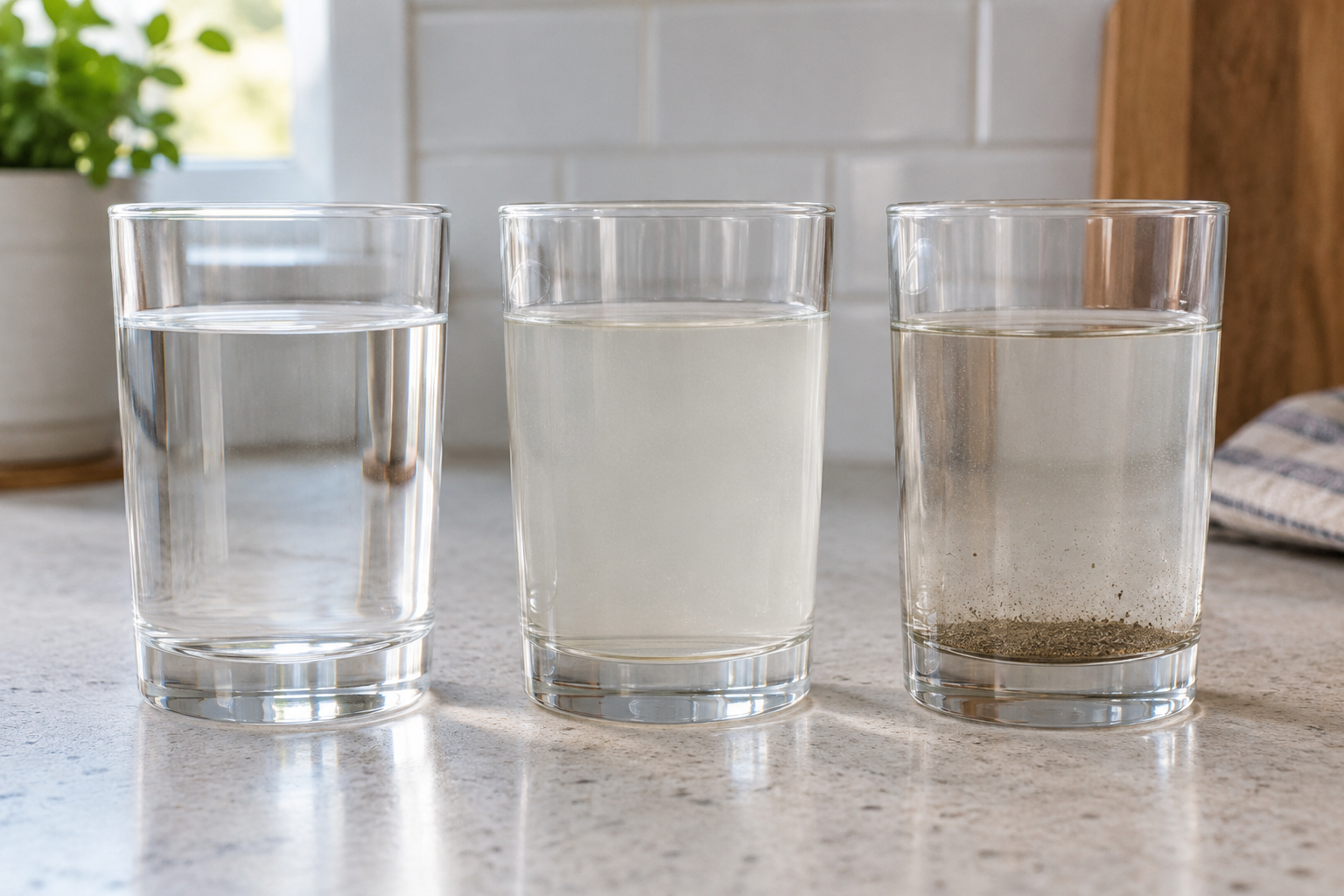
Your nose catches a rotten-egg smell. The tub has a new orange ring. A glass from the kitchen tap looks cloudy or has grit at the bottom. Pick the guide matching what you see. Observe what it looks, smells, or tastes like and where it appears, ask a laboratory the right questions about what to test, then compare repairs or treatment after you receive the results.
Use this guide first if the trouble started after flooding, well damage, a repair, a pressure loss, or another clear event.
Note whether the color appears in the water or only after it sits. Check which fixtures stain, then use laboratory testing to sort through common causes.
Check more than one faucet. Compare hot water with cold water, write down the pattern, then plan the test or repair.
Fill a clear glass and watch it. Compare faucets, then note whether bubbles rise or particles settle. If you see black specks, sand, or grit, use the black particles in well water troubleshooting guide to record where and when they appear before testing.
White residue and poor soap performance can be clues to hardness. A laboratory result tells you how much hardness is present.
Blue-green stains can point to plumbing corrosion. Tell a certified laboratory where you see the stains and ask which sample location and collection method fit the question.
Keep routine testing on the list. Some contaminants do not change the water's taste, smell, or appearance.